 Blaine Window
 Asphalt Shingle Roofing Built for Custer's Climate
Custer sits close enough to the water and open farmland north of Bellingham that its roofs take a different kind of beating than homes further inland. You get salt-laden air drifting off Drayton Harbor and the Strait, wind-driven rain that finds every weak seam, and long gray stretches from fall through spring where roofs barely get a chance to dry out before the next system rolls through. Add the shade from mature conifers on a lot of Custer properties, and you have ideal conditions for moss, algae streaking, and slow granule loss on shingles that weren't installed with this specific environment in mind.
Asphalt shingle roofing remains the most practical choice for most homes in this area — it's cost-effective, repairable, and available in products rated for high wind and algae resistance. But "asphalt shingles" isn't a single decision. The felt or synthetic underlayment, the ice-and-water shield at eaves and valleys, the ventilation behind the shingles, and the flashing details around every penetration matter more here than in a drier climate. Get those wrong and you'll see problems in three to five years instead of twenty-five.
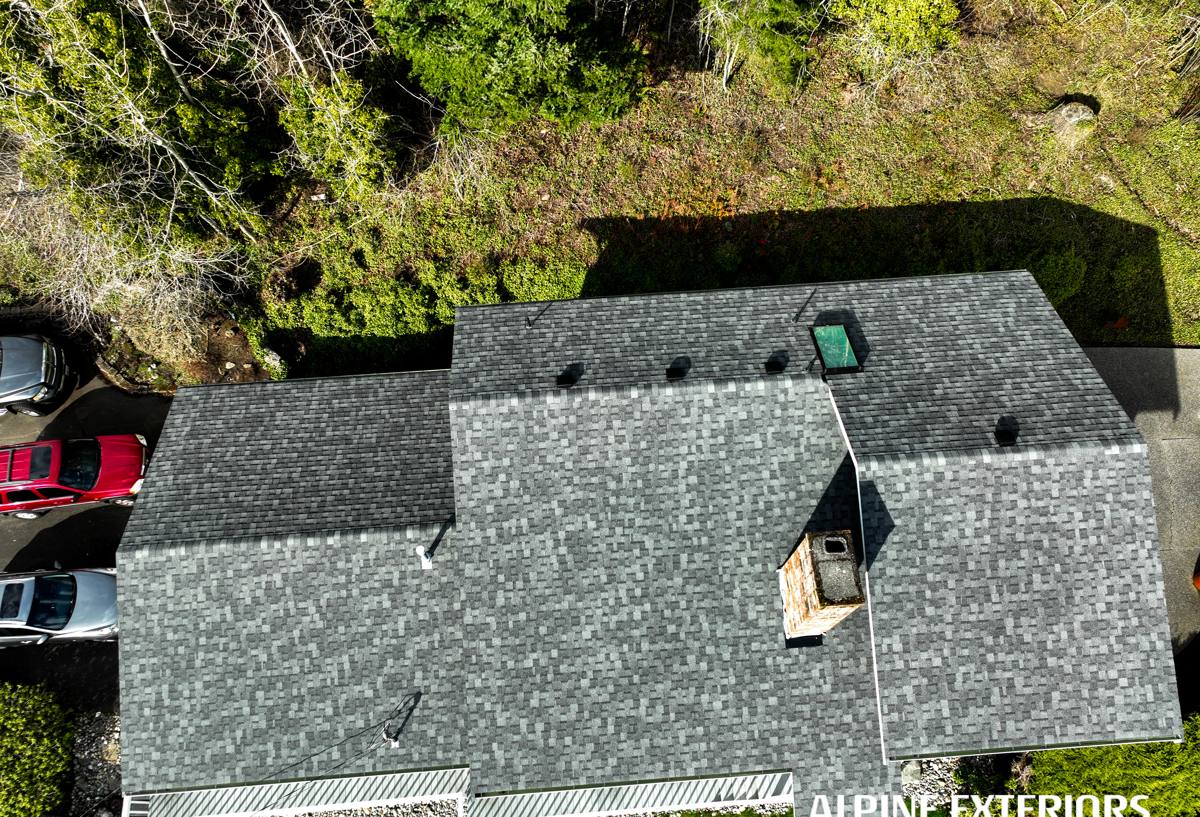
What Whatcom County Weather Does to a Shingle Roof
Moss and Algae
Whatcom County's long wet season and the tree cover common around Custer create near-perfect moss conditions. Moss holds moisture against the shingle surface, works into the granule layer, and over time lifts shingle edges — which is exactly where wind and rain get underneath. Algae staining (the dark streaks you see on north-facing slopes) doesn't damage the roof structurally, but it does shorten the life of the granule coating that protects the asphalt from UV breakdown.
Driving Rain and Wind
Storms coming off the Strait of Georgia often carry sustained wind, which pushes rain sideways instead of letting it run straight down the slope. That means standard nailing patterns and minimal underlayment coverage that might be fine in a calmer climate aren't enough here. Valleys, ridge lines, and anywhere two roof planes meet need extra attention because wind-driven rain finds the path of least resistance, not the path gravity would predict.
Salt Air
Proximity to Semiahmoo Bay and the broader Strait means airborne salt reaches fasteners, flashing, and metal roof accessories. Standard fasteners and lower-grade flashing corrode faster in this environment. It's a slower process than moss damage, but it shows up as rust streaking, weakened nail holds, and pitted metal at valleys and vents years before it should.
What a Correct Asphalt Shingle Job Looks Like Here
A roof that's actually built for Custer's conditions isn't just "shingles nailed to plywood." The parts that matter most are the ones you don't see once the job is finished.
- Ice-and-water shield at eaves and valleys — a self-adhering membrane under the first few feet of shingles and through every valley, giving the roof a backup layer where wind-driven rain and ice dams are most likely to cause trouble.
- Synthetic underlayment across the full deck — more tear-resistant and consistently waterproof than old-style felt, especially useful during a multi-day install when the deck may sit exposed between weather windows.
- Balanced attic ventilation — intake at the eaves, exhaust at the ridge, sized to the attic volume. Without this, moisture gets trapped under the deck, which accelerates rot and undercuts the shingle warranty from underneath.
- Algae-resistant shingles — copper- or zinc-infused granules that slow the biological growth that's otherwise constant in this climate.
- Corrosion-resistant fasteners and flashing — stepped flashing, valley metal, and nails rated for coastal exposure rather than standard-grade hardware.
- Proper nailing pattern for wind exposure — following manufacturer specs for high-wind zones, not the minimum code allowance.
Our Process for a Custer Roof
1. On-Site Inspection
We walk the roof (weather permitting) and check the attic from the inside — looking at deck condition, existing ventilation, moss and algae patterns, flashing condition around chimneys and vents, and any soft spots that suggest trapped moisture. We also look at how the property sits relative to tree cover and wind exposure, since that drives some of our material and ventilation recommendations.
2. Straightforward Written Estimate
You get a clear scope: tear-off or overlay, underlayment type, shingle product, ventilation changes if needed, flashing replacement, and a firm price. No vague allowances that turn into change orders once the tear-off starts.
3. Tear-Off and Deck Check
For a full replacement, we remove existing roofing down to the deck and inspect the sheathing for rot or soft spots — common where old ventilation was inadequate. Any damaged decking gets flagged and replaced before anything new goes down; we don't roof over a compromised deck.
4. Underlayment and Flashing First
Ice-and-water shield at eaves, valleys, and around penetrations, then synthetic underlayment across the field. New flashing at chimneys, skylights, and sidewalls — this is where the majority of leaks originate on older roofs, so we don't reuse questionable flashing to save time.
5. Shingle Installation
Installed to manufacturer spec for wind exposure, with attention to nailing height and pattern. Ridge and hip caps finished to shed water in the direction storms actually come from here — off the water, not just straight downhill.
6. Ventilation and Final Walkthrough
We confirm intake and exhaust venting is balanced, clean up the site, and walk the roof with you (or provide photos/video if you can't be on-site) before calling the job done.
Choosing Between Overlay and Full Tear-Off
Some homes in Custer have a single existing shingle layer in decent shape structurally, which technically allows for a shingle-over-shingle overlay in some cases. We're generally cautious about recommending this locally, because an overlay traps the old layer's moisture and moss underneath the new one and makes it impossible to inspect or repair the deck. Given how much this climate rewards a dry, well-ventilated deck, we typically recommend full tear-off unless the existing roof is genuinely young and problem-free.
| Factor | Full Tear-Off | Overlay |
|---|---|---|
| Deck inspection | Full visibility, rot caught early | Hidden, problems found later or never |
| Ventilation upgrades | Possible during install | Limited to what's already there |
| Weight on structure | Single layer | Double layer, added load |
| Moss/moisture trapped underneath | None — clean start | Old layer's moisture stays sealed in |
| Upfront cost | Higher | Lower, but often a deferred cost |
| Typical lifespan gained | Full new shingle life expectancy | Often shortened by trapped moisture |
Shingle Grades and What Actually Matters for This Area
Not every asphalt shingle is built the same, and the differences that matter most in Custer aren't always the ones marketed hardest.
- Wind rating — look for shingles rated for higher sustained wind speeds, not the base-tier product, given how exposed some Custer properties are to open wind off the water and surrounding farmland.
- Algae resistance — copper-granule or algae-resistant lines cost a bit more up front but noticeably slow the streaking and biological growth this climate produces.
- Warranty structure — read what's actually covered. Many warranties are prorated after the first several years and require documented proper ventilation to stay valid — which is one more reason ventilation isn't optional.
- Impact resistance — worth considering if the property has overhanging conifers that drop branches and cones regularly.
Signs a Custer Roof Needs Attention
Homeowners often wait until there's an active leak, but shingle roofs usually show warning signs well before that point:
- Visible moss growth, especially on north-facing or shaded slopes
- Granules collecting in gutters or at downspout outlets
- Shingle edges curling or lifting, especially after windy weather
- Dark streaking across large sections of the roof
- Soft spots noticeable when walking the roof (a sign a professional should check)
- Daylight visible through the attic roof deck, or damp insulation below it
- Rust staining around flashing, vents, or valleys
Why a Crew That Already Works Custer Matters
Roofing crews unfamiliar with this specific stretch of Whatcom County tend to default to generic underlayment coverage and standard fastener grades — fine in a lot of the country, but not matched to salt air, driving rain off the Strait, and the moss load this area generates. A crew that already works locally knows which slopes need extra ice-and-water coverage, which properties need upgraded ventilation because of surrounding tree cover, and which flashing details actually hold up here versus which ones fail early. That local pattern recognition is the difference between a roof that looks fine at handoff and one that's still performing a decade later.
It also matters for scheduling. Roofing in this region means working around real weather windows, not an idealized forecast. A local crew plans tear-offs and dry-in stages around actual conditions instead of guessing, which keeps your deck from sitting exposed longer than it should.
Maintenance That Extends the Life of a Custer Roof
Even a correctly installed roof benefits from basic upkeep in this climate:
- Keep gutters clear so water isn't backing up under the shingle edge
- Trim back overhanging branches to reduce shade, debris, and moss-friendly conditions
- Have moss treated or gently removed rather than left to grow — avoid pressure washing, which strips granules
- Schedule a roof check every few years, especially after a particularly windy winter
- Address small flashing or granule issues promptly rather than waiting for a leak
If you're in Custer and dealing with moss buildup, an aging roof, or you're just planning ahead before the next wet season, we're happy to take a look and give you a straightforward, no-pressure estimate. Fill out the form below and we'll get in touch to schedule a time that works.