 Blaine Window
 Roof Repair Built for Sumas Conditions
Sumas sits close enough to the water and the foothills that its roofs take a different kind of beating than roofs further inland. Homes here deal with a mix of salt-tinged air blowing in off the Strait, long stretches of driving rain through the fall and winter, and moss seasons that can run half the year in shaded, north-facing sections of a roof. None of that is unusual for Whatcom County, but it does mean a roof repair that works well in a drier climate can fail here within a season or two if it isn't done with local conditions in mind.
We repair roofs in and around Sumas regularly, and most of the calls we get fall into a handful of predictable categories: wind and moss damage to shingles, flashing that's worked loose or corroded, and water finding its way in through spots that were fine for years until one wet winter pushed them past their limit. The fixes themselves aren't exotic. What matters is diagnosing the actual cause instead of patching the symptom, and using materials and techniques that hold up to the specific way this climate wears on a roof.
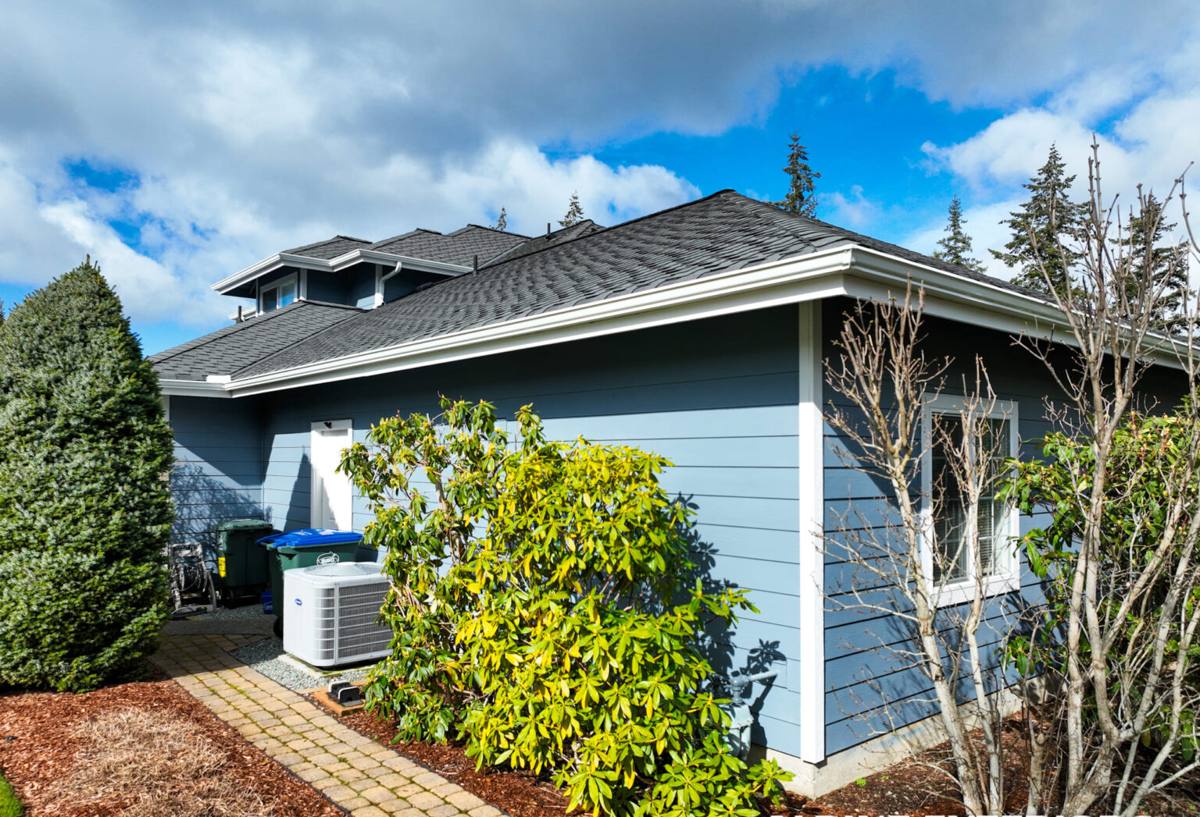
What This Climate Does to a Roof
Salt Air and Metal Fatigue
Proximity to marine air means exposed metal components — flashing, fasteners, gutter hardware, roof vents — corrode faster than they would in a dry inland climate. Corrosion is rarely dramatic; it's slow pitting and weakening that eventually lets water past a seam that used to be tight. When we're repairing flashing or replacing fasteners on a Sumas roof, we account for this and use materials rated for coastal exposure rather than whatever is cheapest at the supply house.
Driving Rain and Wind-Driven Water
Rain that falls straight down is easy for any roof to shed. Rain that comes in sideways during a windstorm is a different problem — it gets pushed up under shingle edges, into vent flashing, and into any gap that a calm-weather roof wouldn't notice. Repairs that only address the surface layer and ignore underlayment or flashing overlap tend to leak again the first time a real wind event rolls through.
Moss, Shade, and Moisture Retention
Whatcom County's tree cover and overcast stretches mean plenty of Sumas roofs have areas that rarely get direct sun — usually north-facing slopes or sections shaded by mature trees. Those spots hold moisture longer, which is exactly what moss needs to establish. Once moss takes hold, it lifts shingle edges, traps water against the roof deck, and accelerates granule loss. A roof that looks fine from the ground can have significant moss damage on the slopes you can't see from the driveway.
Common Roof Repair Needs We See in Sumas
- Moss and algae damage: lifted shingles, granule loss, and soft spots on shaded or north-facing slopes
- Flashing failures: around chimneys, skylights, and roof-wall intersections where corrosion or movement has opened a gap
- Wind-lifted or missing shingles: especially after fall and winter storm systems
- Clogged or damaged gutters: that back water up under the roof edge instead of carrying it away
- Nail pops and fastener corrosion: small individually, but a common source of slow leaks over time
- Deck-level moisture damage: soft or discolored plywood found once shingles are pulled back, usually from a leak that went unnoticed for a while
What a Correct Repair Actually Involves
A roof repair that holds up isn't just swapping out the shingles that are visibly damaged. It starts with figuring out why that section failed in the first place — otherwise you're paying to fix the same spot again in a year or two. Our approach on every repair call includes:
- A full inspection of the affected area and the roof sections around it, not just the spot that's leaking
- Checking the roof deck underneath for soft spots or moisture damage before closing anything back up
- Evaluating flashing, underlayment, and ventilation in the repair zone, since a leak is often a symptom of one of these rather than the shingles themselves
- Matching replacement materials as closely as possible to the existing roof in type, weight, and color
- Confirming water is actually being shed correctly once the repair is complete, not just assuming it because the hole is patched
Our Process, Step by Step
1. Inspection and Honest Assessment
We start by looking at the roof in person — not just the spot you called about, but the surrounding area and any other slopes showing early wear. We'll tell you plainly whether you're looking at a repair, a larger repair, or whether the roof is old enough that repair money would be better spent toward a replacement.
2. A Clear, Written Scope
Before any work starts, you get a straightforward explanation of what's being repaired, why, and what materials we're using. No vague line items.
3. The Repair Itself
We remove damaged material back to solid, dry decking, address the root cause (flashing, ventilation, moss buildup, whatever it turns out to be), and rebuild the section to shed water the way the rest of the roof does.
4. Cleanup and Final Check
We clear debris, check gutters and downspouts in the repair area are clear, and do a final walk-through so you know exactly what was done.
Repair or Replace? How We Help You Decide
Not every leak means a new roof, and not every roof is worth another round of patching. The honest answer depends on the roof's age, how much of it is affected, and what condition the deck is in underneath.
| Factor | Leans Toward Repair | Leans Toward Replacement |
|---|---|---|
| Roof age | Under 15-20 years, depending on material | Nearing or past expected material lifespan |
| Extent of damage | Isolated to one section or slope | Multiple areas failing or widespread granule loss |
| Deck condition | Solid, dry decking under damaged shingles | Soft, rotted, or repeatedly wet decking |
| Moss/algae history | Recent, treatable, not deeply established | Long-term, recurring, damaging multiple slopes |
| Leak pattern | Single, identifiable source | Multiple or migrating leak points |
If a roof is a genuine repair candidate, we'll say so and repair it — we don't push replacement on roofs that don't need it. If the deck or structure is compromised in a way that makes repair a short-term fix at best, we'll explain exactly why and what the trade-offs are.
What Affects Repair Cost
Every roof and every leak is different, so we don't quote sight unseen, but these are the main factors that move a repair estimate up or down:
| Cost Factor | Why It Matters |
|---|---|
| Size of the damaged area | More square footage of shingles, underlayment, or decking to replace |
| Roof pitch and access | Steeper or harder-to-reach roofs take more time and safety setup |
| Deck condition | Rotted plywood found under damaged shingles adds material and labor |
| Flashing complexity | Chimneys, skylights, and multiple roof valleys take more precise work than open field shingle |
| Material match | Matching an older or discontinued shingle can cost more than standard stock |
Why It Matters to Hire a Crew That Already Works Sumas
A roofer who works this part of Whatcom County regularly already knows which slopes tend to develop moss first, how far up under a shingle wind-driven rain can travel in a coastal storm, and which flashing details tend to fail early because of salt exposure. That local pattern recognition shortens the diagnosis step and reduces the odds of a repair that looks right but misses the actual cause. It also means we're not guessing at what "normal" wear looks like for a Sumas roof versus a roof somewhere drier or further from the water — we see this specific climate's effects every week.
Simple Maintenance That Extends a Repair's Life
A good repair lasts longer when the rest of the roof is kept up. A few habits make a real difference in this climate:
- Keep gutters and downspouts clear, especially heading into fall storm season
- Trim back tree limbs that shade roof sections and drop debris, since shade and debris both feed moss growth
- Have moss treated before it spreads rather than after it's lifted shingles
- Walk the roofline visually after major windstorms and note anything that looks lifted or missing
- Address small leaks early — a stain on the ceiling is easier and cheaper to fix than a rotted deck section
Get a Straightforward Look at Your Roof
If you're dealing with a leak, storm damage, or a roof that's just showing its age after another wet Whatcom County winter, we're happy to come take a look. We'll give you a clear, honest read on what's going on and what it would take to fix it right — no pressure, no upsell. Reach out using the form below to schedule a free estimate for your Sumas home.