 Blaine Window
 Why Semiahmoo Siding Wears Differently Than Inland Blaine Homes
Semiahmoo sits right on the water, and that changes what siding has to survive. Homes a few miles inland in Blaine deal with Whatcom County's wet winters and moss pressure like everywhere else in the region, but a house on or near the Semiahmoo spit takes on something extra: near-constant exposure to salt-laden air coming off Semiahmoo Bay and Drayton Harbor. Salt air accelerates corrosion in fasteners, trim, and any siding product with a weak factory finish. Combine that with driving rain off the water and a moss season that can run from fall through spring, and you have a siding assembly that's being tested from every direction at once — moisture from above, wind-driven rain from the side, and salt film settling on every surface in between.
None of this means siding replacement on Semiahmoo has to be a bigger project than elsewhere in Blaine. It means the material choice and the install details matter more, because the margin for error is smaller. A product or installation that would hold up fine set back from the water can fail faster right on it.
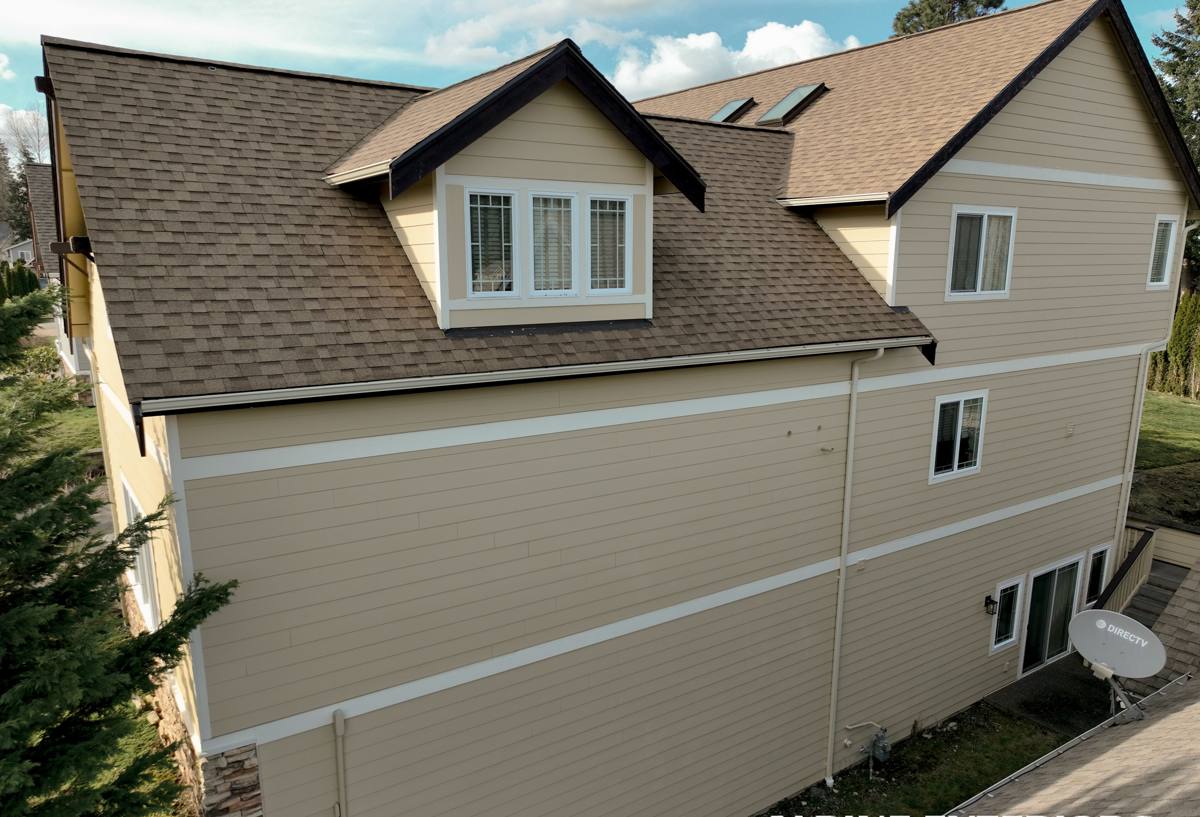
What Salt Air, Driving Rain, and Moss Actually Do to Siding
Salt air
Airborne salt is corrosive to metal fasteners, flashing, and trim, and it can dull or degrade paint finishes over time, especially finishes that weren't engineered for coastal exposure. Products that rely on field-applied paint are more vulnerable here than factory-baked finishes, because a thinner or less consistent paint layer breaks down faster under salt exposure.
Driving rain
Wind off the water doesn't just drop rain straight down — it drives it sideways, into laps, seams, and penetrations. Siding that isn't lapped, flashed, and caulked correctly at every joint will let water behind the cladding, where it can sit against sheathing and framing without ever being visible from the outside.
Moss and prolonged dampness
Whatcom County's long wet season keeps north-facing and shaded wall sections damp for weeks at a time. Moss and algae take hold on surfaces that stay damp, and on wood-based or wood-composite siding, sustained moisture contact is what leads to swelling, delamination, and rot — problems that are largely cosmetic on a non-organic material but structural on one that isn't.
What a Correct Siding Replacement Actually Involves
Siding replacement isn't just removing old boards and nailing up new ones. Done correctly, it's a full envelope job:
- Full tear-off of the old siding down to the sheathing, so hidden rot, soft spots, or trapped moisture get caught before they're covered up again
- Sheathing repair or replacement anywhere water damage is found
- A new weather-resistive barrier installed as a continuous plane, lapped correctly at every seam
- Rainscreen or drainage gap where conditions call for it, so any water that does get past the cladding has somewhere to drain instead of sitting against the wall
- Correct flashing at every window, door, deck ledger, and penetration — this is where most water intrusion problems actually start
- Proper fastening pattern and reveal for the specific siding product, per the manufacturer's installation instructions
- Caulking and sealant only where the manufacturer specifies it — over-caulking can trap moisture just as easily as under-caulking lets it in
Skipping any one of these steps is how a siding job looks fine for a year or two and then starts failing at year five. On a property exposed to salt air and driving rain, the failures show up faster.
Why We Install Only James Hardie Fiber Cement
We standardized on James Hardie fiber cement siding and don't install vinyl, LP SmartSide, primed spruce, cedar, or other fiber cement brands. That's a deliberate call based on what holds up under the conditions homes in this area actually face, not a sales position.
Fiber cement is non-combustible and dimensionally stable — it doesn't expand and contract with moisture the way wood-based products do, which matters directly on a site that stays damp for long stretches. James Hardie's ColorPlus finish is baked on at the factory rather than field-applied, which gives it more consistent coverage and better resistance to fading and wear than a job-site paint coat, particularly under salt air exposure. Hardie also backs its siding with a strong transferable warranty when it's installed to their specification — which is part of why correct installation, not just correct product, is the whole point.
The HZ5 climate-engineered line
James Hardie engineers its HardieZone products by region. HZ5 is built for areas with more moisture, freeze-thaw cycling, and humidity exposure — which fits the Pacific Northwest better than a product line engineered for a drier, more temperate climate zone. Using the climate-matched product line is a detail that's easy to skip and hard to verify after the fact, so it's one we check on every job.
We're not going to tell you vinyl or LP SmartSide are bad products in every application — they're not, and they work fine in plenty of settings. What we will say is that after years of installing and repairing siding in this county, we don't think they're the right call for the moisture and salt exposure homes around here deal with, and we'd rather put our name on one product we trust completely than several we have reservations about.
Our Replacement Process
- On-site assessment. We walk the exterior, check for rot, moisture intrusion, and flashing issues, and look specifically at how exposed each elevation is to prevailing wind and water direction.
- Written scope and estimate. You get a clear breakdown of what's being replaced, what siding line and profile is recommended, and why — no vague allowances.
- Tear-off and inspection. Old siding comes off, sheathing gets inspected, and any damage found gets documented and priced before we cover it back up.
- Water-resistive barrier and flashing. New barrier goes on as a continuous, correctly lapped plane; flashing gets installed at every window, door, and penetration.
- Hardie installation. Siding goes up per James Hardie's fastening, clearance, and reveal specifications for the HZ5 product line.
- Trim, caulking, and finish detail. Corners, trim boards, and joints get finished to manufacturer spec — not more caulk, the right caulk in the right places.
- Final walkthrough. We go over the finished work with you before calling the job complete.
What Drives the Cost of a Siding Replacement
Every home is different, but the same handful of factors move the price on most jobs:
| Factor | Why It Matters |
|---|---|
| Extent of hidden damage | Rot or moisture damage found under old siding adds sheathing repair before new siding can go on |
| Wall complexity | Homes with lots of corners, dormers, or trim detail take more labor per square foot than a simple rectangular elevation |
| Siding profile chosen | Lap width, shingle-style panels, and specialty trim all price differently within the Hardie product line |
| Access and site conditions | Waterfront lots, steep grades, or tight setbacks can affect scaffolding and material staging |
| Existing drainage plane | Adding a rainscreen gap where one doesn't exist is worth the added labor on high-exposure walls |
| Number of elevations replaced | Full-house replacement versus a single exposed elevation changes both cost and how well the finished look matches |
We'd rather walk your specific property and give you real numbers than throw out a broad range that doesn't mean much until someone's actually looked at the house.
Signs Your Semiahmoo Home May Need Siding Replacement Now
- Visible cracking, buckling, or warping in siding boards
- Soft or spongy spots when you press on the siding, especially near the bottom courses
- Paint that's peeling, bubbling, or wearing unevenly, particularly on water-facing walls
- Persistent moss or algae growth that comes back quickly after cleaning
- Visible gaps at seams, corners, or trim joints
- Rising energy bills that suggest the wall assembly isn't performing the way it should
- Interior signs like musty smells, staining, or soft drywall near exterior walls
Any one of these on its own isn't necessarily an emergency, but on a home exposed to salt air and driving rain the way Semiahmoo properties are, it's worth having someone look before the next wet season sets in.
Maintenance After Installation
Fiber cement siding is low-maintenance, not no-maintenance, especially this close to the water. A periodic rinse to clear salt film and organic buildup, a visual check of caulking and trim joints once a year, and prompt attention to any landscaping that's grown in against the siding all go a long way toward getting the full lifespan out of the installation. None of this is heavy work — it's the kind of upkeep that takes an afternoon and saves a much bigger repair down the road.
Why a Blaine-Based Crew Matters for Semiahmoo Work
Siding replacement on a waterfront or near-waterfront property isn't identical to the same job a few miles inland, and a crew that only occasionally works this close to the water is more likely to miss the details that matter here — the flashing detail on a wind-exposed corner, the drainage plane on a wall that stays shaded and damp most of the year, the fastener spec that holds up against salt air instead of just looking fine on install day. Working Blaine and the surrounding Whatcom County coastline regularly means we've seen how houses in this specific environment age, what fails first, and what holds up. That's the kind of judgment that doesn't show up in a spec sheet — it comes from doing the work here, on homes like yours, season after season.
Getting Started
If you're seeing early wear on your siding, dealing with a recurring moss problem, or just planning ahead for a home on Semiahmoo, we're happy to take a look and give you a straightforward assessment — no pressure, no upsell. Request a free estimate using the form below and we'll set up a time to walk the property with you.