 Blaine Window
 Why Peace Arch Homes Wear Out Windows Faster
Homes near the Peace Arch area sit close enough to the water and the border corridor that they take a different kind of weathering than houses further inland in Whatcom County. The salt-laden air off the Strait works into aluminum hardware and steel fasteners years before it would in a drier, inland town. Add in wind-driven rain that hits window walls at an angle rather than straight down, and a moss and mildew season that can stretch from October well into spring, and you have three separate forces all attacking the same weak points: seals, sills, and flashing.
None of that means windows in this neighborhood fail faster because the products are bad. It means the installation has to account for conditions that a generic install, done to a national average standard, often doesn't. That's the real difference between a window replacement job that lasts fifteen-plus years here and one that starts showing fog, soft trim, or drafts within five.
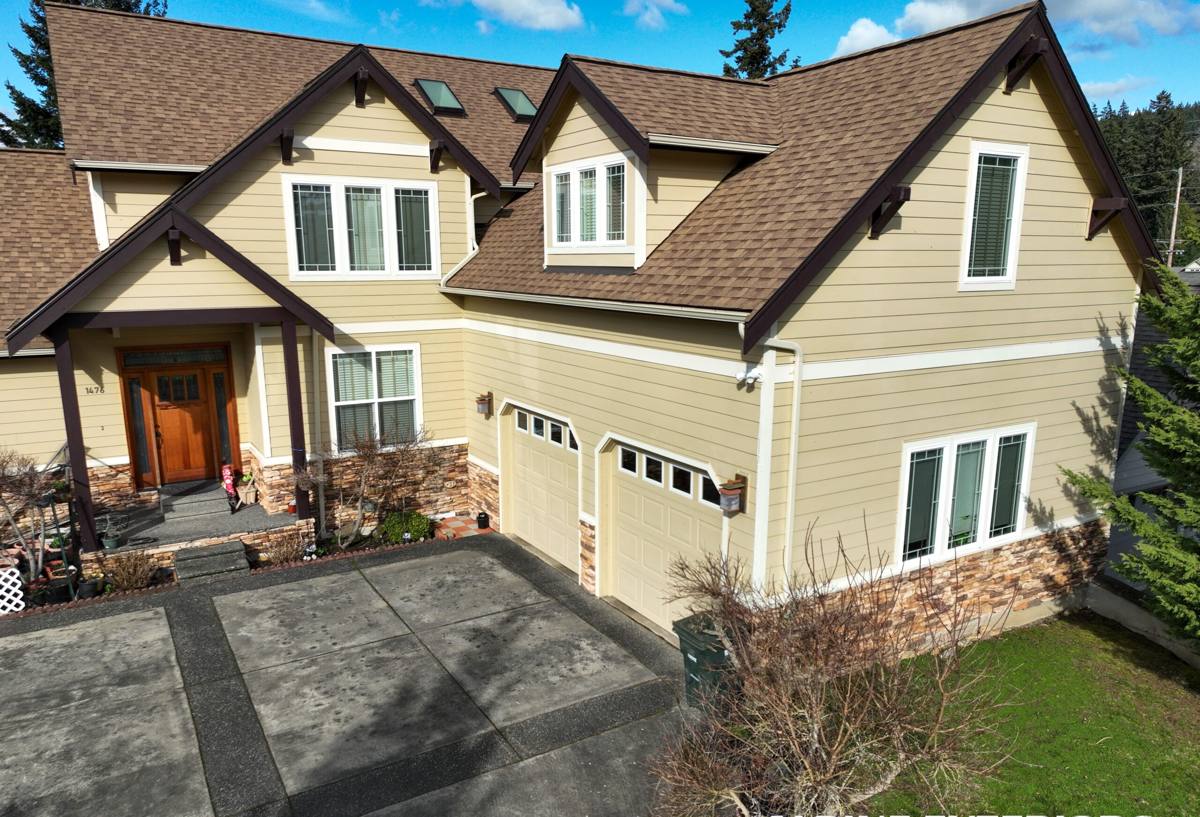
What "Correct" Window Replacement Looks Like in This Climate
A correct install for a Peace Arch home isn't just popping a new unit into an old opening. It starts with the opening itself. We check the sill and framing for moisture damage before anything goes in, because installing a new window over a soft or already-wet sill just seals the problem behind fresh trim. Any rot gets cut out and the framing rebuilt before the window ever goes in.
From there, flashing and sealing matter more here than almost anywhere else in the county. Wind-driven rain doesn't just run down a wall — it can push sideways and even slightly upward into gaps that a straight-down rain would never reach. That means:
- Proper sill pan flashing under every window, not just caulk at the bottom edge
- Weather-resistant barrier integration so water is directed out and down, not trapped behind the siding
- Corrosion-resistant fasteners and hardware suited to salt-air exposure
- Backer rod and quality sealant at the exterior trim, sized and applied for the actual gap — not just a bead run down the edge
- Interior air sealing so moist indoor air isn't driving condensation into the wall cavity
Skip any one of these steps and the window may look fine for a year or two while moisture quietly works behind the trim.
Moss and Mildew Season Considerations
Blaine's long, wet stretch of the year means algae and moss don't just grow on roofs — they take hold on window sills, trim, and anywhere water sits instead of draining. Sill design and slope matter: a sill that's dead level, or worse, pitched slightly the wrong way, becomes a place for standing water and organic growth to build up season after season. Part of a correct install is making sure water has a clear, quick path off the sill and away from the wall.
Signs a Peace Arch Home Needs Window Replacement
Because of the salt air and rain exposure here, the warning signs often show up earlier and differently than a textbook "your windows are old" checklist. Watch for:
- Fogging or moisture between panes of double-glazed units — a sign the seal has failed
- Soft, spongy, or discolored trim and sill wood, especially on walls facing the water or prevailing wind
- Visible corrosion or pitting on aluminum or steel hardware and hinges
- Drafts you can feel even with the window latched, particularly during wind events
- Persistent moss, algae, or black mildew staining on sills that keeps returning after cleaning
- Windows that stick, won't stay open, or are difficult to lock — often a sign the frame has shifted or swollen
Any one of these on its own might just need a repair. Several together, especially on an older single-pane or early-generation vinyl window, usually means replacement is the more honest recommendation.
Material and Glass Choices for Salt Air and Coastal Rain
There's no single "best" window material for every home — the right choice depends on the home's age, siding type, and how exposed a given wall is to wind and salt spray. That said, a few practical trade-offs come up constantly on Peace Arch jobs:
| Frame Material | How It Handles This Climate | Maintenance Reality |
|---|---|---|
| Vinyl | Won't corrode from salt air; performs well in most coastal exposure | Low maintenance; quality of the extrusion and weld matters more than brand name |
| Fiberglass | Very stable in temperature and moisture swings; strong option for higher-exposure walls | Low maintenance; higher upfront cost |
| Aluminum | Prone to corrosion and pitting near the water unless it's a marine-grade or well-clad product | We're selective about where we recommend it here for that reason |
| Wood / wood-clad | Excellent look and insulation, but exposed wood is vulnerable to Blaine's wet season | Needs regular exterior maintenance and repainting or sealing to hold up |
On glass, we generally steer homeowners toward dual-pane units with a low-E coating and a warm-edge spacer system. The spacer — the material separating the two panes at the edge — is where seal failures usually start, and a poor-quality spacer shows fogging years before it should, especially with the temperature and humidity swings common here. It's a detail that's easy to overlook but has an outsized effect on how long the window actually performs.
Our Window Replacement Process
1. On-Site Assessment
We walk the home, look at each window from both inside and out, and check framing and sill condition — not just the glass. This is also where we talk through which walls take the most weather and where that should influence material or detailing choices.
2. Honest Recommendation
We'll tell you plainly if a window can be repaired instead of replaced, or if only some of the windows on the home need attention now. We're not interested in selling a full-house replacement when three windows are the actual problem.
3. Removal and Opening Prep
Old units come out carefully to avoid damaging surrounding siding and trim. Any rot, soft framing, or failed old flashing gets addressed before the new window goes in — this step is non-negotiable, because it's the one most likely to get skipped by crews trying to move fast.
4. Flashing, Sealing, and Installation
Sill pan flashing, weather-resistant barrier tie-in, correct fastener spacing, and proper shimming so the window operates smoothly and seals evenly. This is where the coastal-specific detailing described above actually happens.
5. Interior and Exterior Finish
Trim, caulk, and paint or stain matched to the home. We clean up fully and walk the finished windows with you before calling the job done.
Cost Factors to Expect
Every home is different, so we won't quote a number without seeing the job, but the main variables that move price on a Peace Arch project are consistent:
| Factor | Why It Affects Cost |
|---|---|
| Frame material chosen | Vinyl, fiberglass, and wood-clad carry different material costs |
| Extent of rot or framing repair | Hidden moisture damage found during removal adds labor and material |
| Window size and configuration | Large picture windows, bays, or custom shapes cost more than standard sizes |
| Number of windows in one visit | Doing several at once is more efficient than one-off replacements over time |
| Exterior trim and siding work | Matching existing trim or repairing surrounding siding adds scope |
Permits and Local Considerations
Depending on the scope of work and the home's location, window replacement can be subject to local building permit requirements, particularly if the rough opening size is changing or the home is in certain zoning or shoreline-adjacent designations near Blaine. We handle the determination of what's required and pull any necessary permits as part of the job, so you're not left figuring out Whatcom County or City of Blaine requirements on your own.
Why a Crew That Already Works Peace Arch Matters
Window replacement isn't a one-size-fits-all trade. A crew that mostly works inland, drier jobs may do fine work in general, but coastal detailing — sill pan flashing, corrosion-aware hardware choices, sealant selection for constant damp — isn't always second nature if it isn't what they see every week. Working this specific area regularly means we already know which walls tend to take the worst of the weather, what kind of moisture damage to expect when we open up an old sill, and which materials hold up honestly over time versus which ones just look good on install day.
It also means we're a known, local presence if a question comes up after the job is done — not a company that did one project in the neighborhood and moved on.
Keeping New Windows Performing Long-Term
Even a correctly installed window benefits from a little seasonal attention in this climate. A short annual routine goes a long way:
- Rinse salt residue off frames and glass periodically, especially after storms
- Clear sills of debris and moss growth before it stains or holds moisture
- Check and re-caulk any hairline gaps in exterior trim before the wet season starts
- Test that weep holes (small drainage openings in the frame) are clear and not blocked by paint or debris
- Operate each window through its full range a few times a year so hardware doesn't seize
None of this requires a professional visit — it's just basic upkeep that protects the investment you've already made.
If you're noticing drafts, fogged glass, or trim that's starting to look tired on your Peace Arch home, we're happy to take a look and give you a straight, no-pressure assessment of what your windows actually need. Use the form below to request a free estimate.