 Blaine Window
 Roofing in Everson's Wet, Mossy Climate
Everson sits in the Nooksack Valley in Whatcom County, where long, wet winters and a mild but humid summer create some of the toughest working conditions a roof will face in Washington. The area doesn't get the direct salt exposure of the coast the way Blaine or Birch Bay do, but it shares the same driving rain, low winter sun angle, and heavy moisture load that shortens the life of an ordinary roof. Add in the tree cover common around Everson's rural and semi-rural lots, and you get long moss seasons that start earlier and last longer than in drier parts of the state.
A roof built for a dry climate doesn't hold up here. Ventilation, underlayment choice, flashing detail, and even the pitch of certain roof sections all need to account for near-constant moisture exposure for six to eight months of the year. When we replace a roof in Everson, we're not just swapping old shingles for new ones — we're rebuilding the whole system to actually shed water and resist moss growth for the long haul.
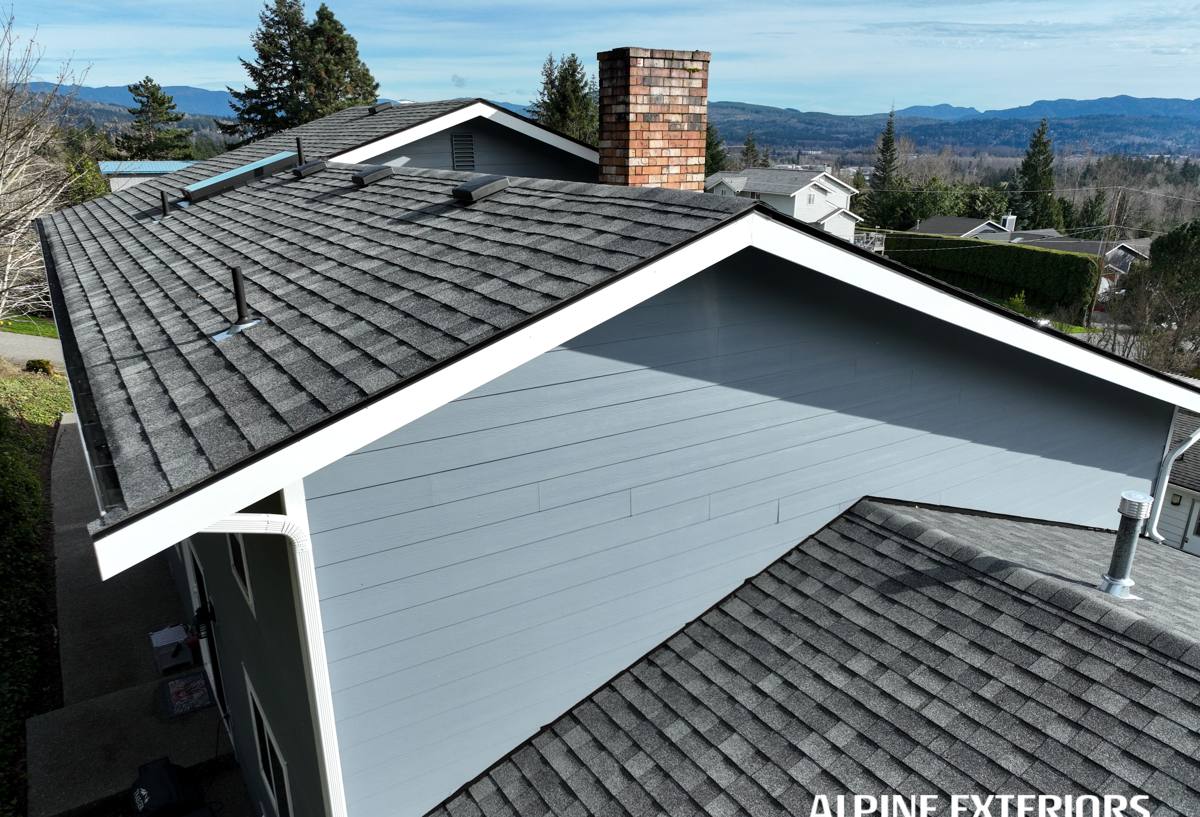
Why Whatcom County Moisture Wears Roofs Out Faster
Three things do most of the damage to roofs in this part of the county:
- Driving rain — wind-driven rain off the valley pushes water sideways under shingle tabs and around flashing that would stay dry in a calmer climate.
- Moss and organic growth — shaded, north-facing slopes and roofs under mature trees stay damp for days after a storm, giving moss and moss spores time to root into the shingle surface.
- Temperature swings — freeze-thaw cycles in winter, even mild ones, work moisture into small cracks and expand them over time.
None of these are dramatic events. They're slow, cumulative wear — which is exactly why so many Everson homeowners are surprised when a roof that "looked fine" turns out to have soft decking or failed underlayment underneath.
Signs an Everson Roof Needs Replacing, Not Just Repairing
Not every roofing problem calls for a full replacement. But there's a point where patching stops making financial sense and a full tear-off becomes the honest recommendation. We look for:
- Granule loss heavy enough that you can see bare, shiny patches on shingles
- Shingles that are curling, cupping, or cracking across multiple sections of the roof, not just one spot
- Moss growth that's lifted shingle edges rather than just sitting on the surface
- Soft or spongy decking felt underfoot during inspection
- Daylight visible through the roof deck from inside the attic
- Repeated leaks in different locations after previous patch repairs
- A roof approaching or past the manufacturer's expected service life for our climate (often 15-20 years for standard asphalt shingles here, shorter than the national average due to moisture exposure)
If your roof shows one or two of these signs isolated to a small area, a repair is often the right call and we'll say so. Full replacement makes sense when the wear is spread across the roof or when the decking itself has been compromised.
What a Correct Roof Replacement Actually Involves
Tear-Off and Deck Inspection
We remove the old roofing material down to the deck rather than layering new shingles over old — layering traps moisture and hides deck damage that needs to be addressed before new material goes down. Once the deck is exposed, we inspect every sheet of sheathing for soft spots, delamination, or rot, particularly around valleys, chimneys, and any area where past leaks were reported.
Underlayment
Underlayment is the roof's real waterproofing layer — shingles are the first line of defense, but underlayment is what keeps water out if wind, ice, or a lifted shingle lets moisture through. In a climate like Everson's, we favor synthetic underlayment for its consistent water resistance, and we install self-adhered ice-and-water membrane at vulnerable points: eaves, valleys, and around any roof penetration.
Flashing
Flashing failure is one of the most common causes of roof leaks, and it's rarely the shingles' fault. Chimneys, skylights, vent pipes, and roof-to-wall transitions all need properly formed and sealed flashing. We replace flashing during a full roof replacement rather than reusing old pieces, since corroded or improperly seated flashing is a leak waiting to happen regardless of how new the shingles above it are.
Ventilation
A roof that can't breathe traps moisture in the attic, which shortens the life of the decking from underneath — invisible from the outside until it's a serious problem. We check and correct intake and exhaust ventilation balance as part of every replacement, not as an upsell.
Final Material Installation
Shingles or panels go down last, following manufacturer nailing patterns and exposure specifications exactly. Cutting corners here — improper nail placement, incorrect exposure, skipped starter courses — is what causes premature failure and voids manufacturer warranties.
Roofing Material Options for Everson Homes
Material choice matters more in a wet, moss-prone climate than in most parts of the country. Here's how the common options compare for this area:
| Material | Moisture & Moss Resistance | Typical Lifespan Here | Best Fit |
|---|---|---|---|
| Standard 3-tab asphalt shingle | Fair — needs regular moss treatment | 15-18 years | Budget-conscious replacements |
| Architectural (laminate) shingle | Good — thicker profile sheds water better | 20-25 years | Most Everson homes; best value long-term |
| Metal roofing (standing seam) | Excellent — sheds moisture, minimal moss growth | 40+ years | Homeowners planning to stay long-term or under heavy tree cover |
| Cedar shake | Poor without diligent maintenance — retains moisture | Varies widely | Only with a clear maintenance commitment |
We don't push cedar shake in this climate as a default recommendation. It can look great, but it requires consistent upkeep to manage moisture retention, and we'd rather set that expectation up front than have a homeowner surprised by the maintenance burden two years in. If you love the look, we'll talk through what it actually takes to keep it performing well here.
Our Roof Replacement Process
- On-site inspection — we walk the roof (weather permitting) and the attic, documenting condition, ventilation, and any problem areas.
- Written estimate — a clear scope of work and price, including material options, with no vague allowances.
- Scheduling around weather windows — in Whatcom County, timing a tear-off to avoid getting caught mid-project by a rain system is part of the job, not an afterthought.
- Tear-off and deck repair — old material removed, deck inspected and repaired as needed before anything new goes down.
- Underlayment, flashing, and ventilation correction — the system underneath the visible roof gets built right.
- Material installation — shingles or panels installed to manufacturer spec.
- Final walkthrough — we review the finished roof with you, including gutters and any areas needing follow-up maintenance like moss treatment scheduling.
Cost Factors for an Everson Roof Replacement
Every roof is different, and we don't quote prices without seeing the actual roof, but these are the main factors that move the number:
| Factor | Why It Affects Cost |
|---|---|
| Roof size and number of stories | More square footage and steeper access both add labor time |
| Roof pitch and complexity | Multiple valleys, dormers, and steep slopes take longer and require more flashing detail |
| Deck condition | Rotted or soft sheathing found during tear-off needs replacement before new roofing goes on |
| Material selected | Standard asphalt, architectural shingle, and metal carry different material and labor costs |
| Tear-off layers | Removing multiple layers of old roofing takes more labor than a single-layer tear-off |
| Ventilation and flashing corrections | Fixing underlying ventilation or flashing issues adds scope but prevents future leaks |
What to Ask Before Hiring a Roofing Crew in Everson
Roof replacement is a significant investment, and it's worth vetting a contractor carefully before signing anything. A few things worth checking:
- Are they licensed and insured to work in Washington, and will they provide proof without being asked twice?
- Do they do a full tear-off and deck inspection, or do they quote over the phone without seeing the roof?
- Is the estimate written and itemized, or a vague verbal number?
- Do they explain ventilation and underlayment, or only talk about shingle color and price?
- Can they explain how they handle a rain delay mid-project, given how often that comes up in this climate?
- Do they offer a manufacturer-backed warranty on materials in addition to a workmanship warranty on the labor?
A contractor who can answer these clearly and without hesitation is generally one who does this work regularly and does it correctly.
Why Local Experience in Everson Matters
A crew that's worked roofs across Whatcom County knows how the moisture patterns in this valley differ from a roof twenty minutes away in Blaine or out toward the coast. They know which slopes tend to hold moss longest, how tree cover on a given lot affects drying time after storms, and how to schedule a tear-off around the region's rain patterns instead of gambling on an exposed deck overnight. That local knowledge doesn't replace good workmanship, but it does mean fewer surprises during the project and a roof that's built with this specific climate in mind rather than a generic install.
Get a Free, No-Pressure Estimate
If your Everson roof is showing granule loss, moss buildup, curling shingles, or you just want an honest read on how much life it has left, we're happy to take a look. The estimate is free, there's no pressure to book anything on the spot, and you'll get a straight answer about whether you need a full replacement or just targeted repairs. Fill out the form below to get started.