 Blaine Window
 Why Cherry Point Roofs Wear Differently
Cherry Point sits right up against the Strait of Georgia, and that shoreline exposure changes what a roof has to survive compared to a home a few miles inland in Blaine or Custer. Salt-laden air off the water, wind-driven rain that gets pushed sideways into roof edges and valleys, and a moss season that runs longer here than in drier parts of Whatcom County all add up. A roof that would perform fine in a sheltered subdivision can fail early on a Cherry Point property if it wasn't installed with this specific exposure in mind.
This page covers what a correct new roof installation looks like for homes in and around Cherry Point specifically — the materials, the details that matter most in this climate, and what our process looks like from first look to final walkthrough.
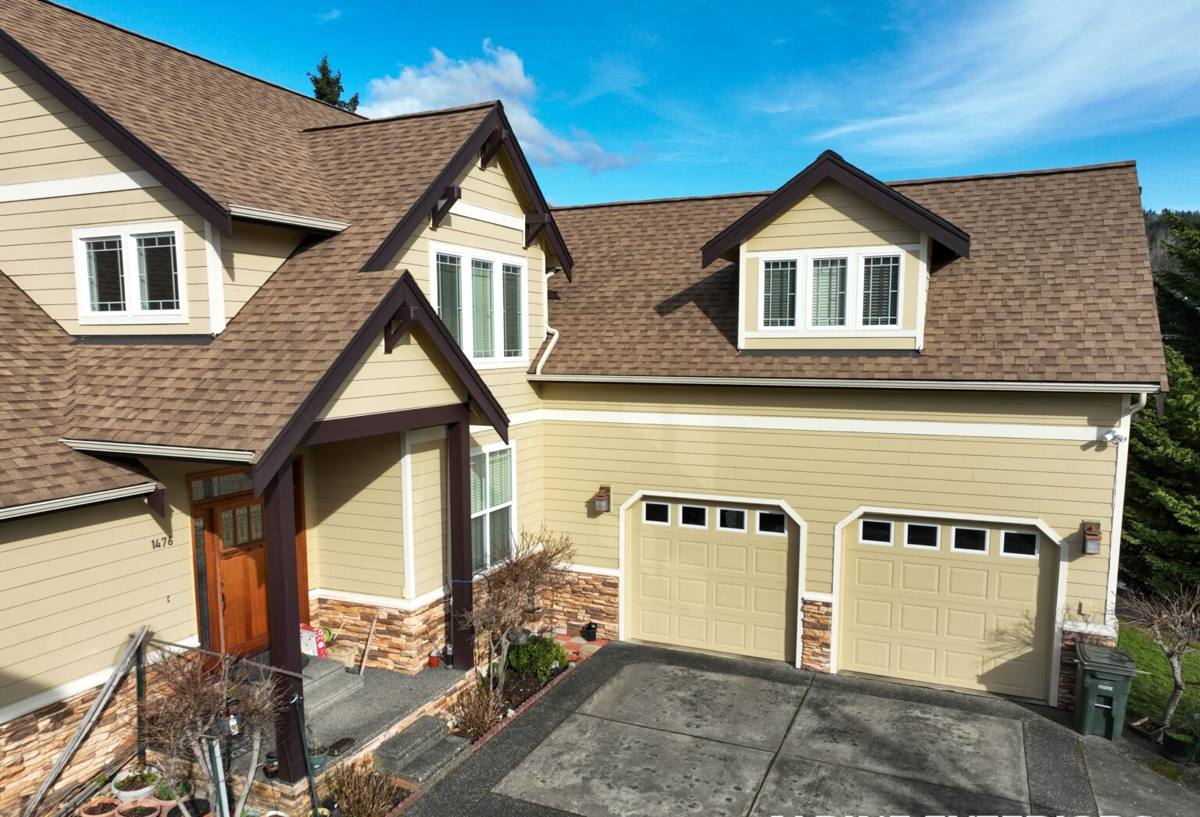
The Climate Factors That Actually Matter Here
Salt Air and Metal Fatigue
Airborne salt accelerates corrosion on any exposed metal component of a roof system — flashing, fasteners, vents, and drip edge. On a standard asphalt shingle roof, the shingles themselves aren't the weak point near the water; it's the metal detailing around penetrations and edges that corrodes first if the wrong grade of material or fastener was used. We spec corrosion-resistant flashing and fasteners as standard on Cherry Point installs, not as an upgrade.
Driving Rain and Wind-Pushed Water
Open water exposure means wind isn't just blowing rain down — it's blowing it sideways and sometimes upward under the eaves. Roofs in this kind of exposure need underlayment and edge details that account for water being pushed uphill by wind pressure, not just gravity-fed drainage. This is one of the most common places we see older Cherry Point roofs fail: adequate for normal rain, undersized for wind-driven rain off the strait.
Extended Moss Season
Cool, damp, shaded conditions are ideal moss growing conditions, and Whatcom County's marine climate keeps roofs damp longer into the season than drier inland areas get. Moss isn't just cosmetic — it holds moisture against the roofing material, works its way under shingle edges, and can lift and separate roofing layers over time if left unmanaged. A new roof installed with moss-resistant strategy in mind holds up dramatically better than one that isn't.
What a Correct New Roof Installation Includes
A new roof is more than shingles nailed to plywood. In a coastal exposure like Cherry Point, every layer of the system has a job to do, and skipping or downgrading any one of them shortens the life of the whole roof.
- Deck inspection and repair — any soft, rotted, or water-damaged sheathing gets replaced before new material goes down, not covered over.
- Ice-and-water shield at vulnerable zones — eaves, valleys, and penetrations get a self-adhering waterproof membrane, which matters more here given wind-driven rain patterns.
- Synthetic underlayment across the full deck — a secondary water barrier under the primary roofing material.
- Corrosion-resistant flashing and fasteners — sized and specified for salt-air exposure, not generic inland-grade hardware.
- Balanced ventilation — intake at the eaves and exhaust at the ridge, sized to the attic volume, to control condensation and moisture buildup from the inside out.
- Proper starter course and edge detail — the single most common failure point we find on older Cherry Point roofs during tear-off.
Every one of these is a place where a rushed or budget installation cuts corners that don't show up as a problem for a year or two — and then show up as a leak, rot, or premature granule loss right when the roof should still have a decade or more of life left.
Choosing the Right Roofing Material
There's no single "best" roofing material for every home — it depends on the roof's exposure, the home's structure, and the owner's budget and maintenance appetite. Here's how the common options stack up for a shoreline-exposed property like those in Cherry Point.
| Material | Coastal Performance | Maintenance | Typical Lifespan |
|---|---|---|---|
| Architectural asphalt shingles | Good, with proper flashing and fastener spec | Periodic moss treatment and gutter clearing | 25–30 years |
| Standing seam metal | Excellent — sheds wind-driven rain and resists moss buildup | Low; occasional fastener and seam check | 40–50+ years |
| Composite/synthetic shake | Very good; consistent performance without wood's moisture sensitivity | Low to moderate | 30–50 years |
| Cedar shake | Requires diligent upkeep in a damp marine climate | High — regular treatment against moss and moisture | 20–30 years with upkeep |
We're upfront with Cherry Point homeowners: real cedar shake can look great, but a damp, shaded, salt-air site is the hardest possible environment for it to hold up without a real maintenance commitment. If a homeowner wants that look with less upkeep, composite shake products get close to the appearance with far more forgiving moisture behavior. We'll walk through the honest trade-offs for your specific roof rather than just selling the highest-margin option.
Our Installation Process
1. On-Site Assessment
We walk the roof and the attic, not just look at it from the ground. Attic ventilation, decking condition, and existing moisture damage all get checked before we quote anything, because those findings change what the job actually needs.
2. Written Scope and Material Plan
You get a clear, itemized plan — tear-off scope, decking allowance, underlayment and flashing spec, ventilation plan, and the material options that make sense for your home's exposure and budget. No vague line items.
3. Tear-Off and Deck Repair
Full tear-off to bare decking so nothing gets buried. Any damaged sheathing is replaced and documented before new material goes on.
4. Installation to Spec
Underlayment, flashing, ventilation, and roofing material go in per the plan — with the coastal-grade detailing that matters for a Cherry Point exposure, as standard practice, not an add-on.
5. Cleanup and Walkthrough
Magnetic sweep for stray fasteners, full site cleanup, and a walkthrough so you understand what was done and what to watch for going forward.
What Drives Cost on a Cherry Point Roof
Every roof is priced on its own specifics, but a few factors consistently move the number on shoreline-exposed homes:
- Roof size and pitch — steeper roofs take longer and need more fall-protection setup.
- Layers to remove — a tear-off with multiple existing layers costs more in labor and disposal than a single-layer roof.
- Decking condition — rot or soft sheathing found during tear-off adds material and labor that can't be known until the old roof is off.
- Material choice — asphalt, metal, and composite carry different upfront costs and different long-term maintenance costs.
- Ventilation upgrades — homes with inadequate existing attic ventilation may need added intake or exhaust vents to meet code and protect the new roof's warranty.
- Access and site conditions — steep lots, limited driveway access, or landscaping close to the house can affect setup and disposal logistics.
We give a firm, written quote after the on-site assessment — not a rough phone estimate — so there are no surprise add-ons once tear-off starts, aside from decking conditions that genuinely can't be seen until the old roof is off.
Signs Your Roof Needs Replacing, Not Just Patching
Homeowners often ask us to look at a leak and end up learning the roof has bigger issues than the one visible spot. Watch for these signs:
- Granule loss showing up in gutters, especially after wind or heavy rain events
- Shingles that are cupping, curling, or cracking, particularly on south- and west-facing slopes
- Moss buildup that returns quickly after cleaning, or is thick enough to hold visible moisture
- Soft spots or sagging when walked on, which usually indicates deck damage underneath
- Daylight visible through the attic roof boards, or damp insulation after storms
- A roof older than 20–25 years that hasn't had a full replacement, even if it "looks okay" from the ground
Any one of these on its own might be a repair. Several together, especially on an older roof, usually mean replacement is the more cost-effective path rather than repeated patch jobs on a system that's reaching the end of its service life.
Why Local Cherry Point Experience Matters
A roofing crew that mostly works drier, more sheltered parts of Whatcom County doesn't automatically know how to spec a roof for open-water exposure. The details that keep a Cherry Point roof watertight — flashing grade, edge detail, ventilation balance, moss-resistant strategy — are learned by working this specific stretch of coastline, seeing what fails here and why, and building the fix into every install going forward. That's the difference between a roof that's technically installed correctly on paper and one that's actually built for the site it's on.
We also know the practical side of working near the water: coordinating around weather windows, protecting landscaping and shoreline-adjacent property during tear-off, and building a schedule that accounts for this area's wetter stretches rather than fighting them.
Get a Free, No-Pressure Estimate
If your Cherry Point home has an aging roof, visible moss, or you just want an honest read on how much life is left in what you have, we're happy to take a look. Fill out the form below for a free, no-pressure estimate — we'll assess the roof and attic, explain what we find in plain language, and give you a clear written plan with no obligation.