 Blaine Window
 Roofing Built for Blaine Harbor's Weather, Not Just Any Weather
Blaine Harbor sits right where Whatcom County's marine air meets the open water, and that combination is harder on a roof than most homeowners realize until they're dealing with a leak. Salt-laden air, wind-driven rain that comes in sideways off the water, and a long moss season that never really ends all work against an asphalt shingle roof in ways that inland Blaine or Bellingham roofs don't experience quite the same way. A roof that's correctly specified and installed for this stretch of the county holds up. One that's installed to a generic spec, or by a crew unfamiliar with harbor-side conditions, tends to show problems early — granule loss, lifted shingles, moss intrusion under the shingle mat, and corroding fasteners are all things we see more often on homes close to the water.
This page is specifically about asphalt shingle roofing for homes in and around Blaine Harbor. If you're comparing options or trying to understand what a correct job actually involves before you get quotes, this should help.
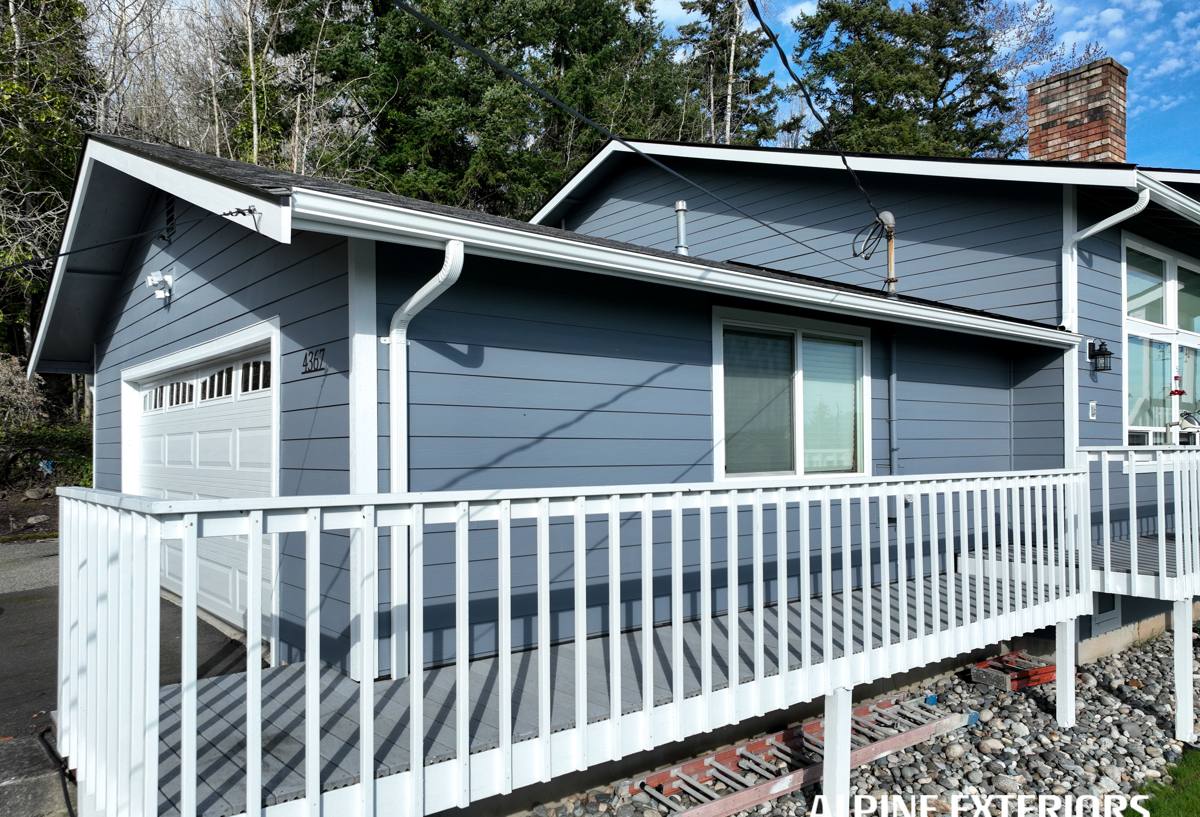
Why the Harbor Environment Is Harder on Shingle Roofs
Salt Air and Metal Components
Salt air accelerates corrosion on any exposed metal — nail heads, flashing, drip edge, vent stacks, and gutter hardware. On a standard shingle roof, most of the fasteners are hidden under the shingle courses, but flashing and exposed metal at valleys, chimneys, and roof-to-wall transitions take the brunt of it. Lower-grade galvanized fasteners and flashing can start showing rust streaks and pitting years before they would on a home fifteen or twenty miles inland. This is why fastener and flashing material choice matters more here than it does in a lot of other parts of the county.
Driving Rain and Wind-Driven Water
Blaine Harbor gets weather systems that push rain horizontally, not just straight down. That changes how water behaves on a roof — it can drive up under shingle tabs, work sideways at laps, and find its way into places a roof designed only for vertical rainfall wouldn't need to worry about. Valleys, eaves, and any roof penetration are the places this shows up first. A roof built for average rainfall without accounting for wind-driven exposure is more likely to develop slow, hard-to-trace leaks after a few winters of harbor storms.
Moss, Shade, and a Long Growing Season
Whatcom County's mild, wet climate gives moss a long window to establish itself, and moss doesn't just sit on top of shingles looking messy — it holds moisture against the shingle surface, works its way under tabs and granules, and can lift shingle edges over time. North-facing slopes and roof sections shaded by mature trees or neighboring structures are the areas that need the most attention. Left unaddressed for a few seasons, moss growth shortens the practical life of an otherwise sound roof.
What a Correctly Built Shingle Roof Looks Like Here
A shingle roof isn't just shingles — it's a system, and every layer matters more in a harbor environment.
Underlayment and Water Barrier
We treat underlayment as the actual waterproofing layer, with the shingles as the wear surface on top. Self-adhered ice-and-water membrane at eaves, valleys, and around penetrations gives the roof a sealed backup layer exactly where wind-driven rain is most likely to get pushed. Synthetic underlayment across the rest of the field holds up better to the wet install conditions common here than older felt products.
Flashing Details
Valleys, chimneys, skylights, and wall transitions are where the majority of roof leaks actually start, not the open shingle field. We use corrosion-resistant flashing material and proper step and counter-flashing techniques at every transition, since these are exactly the spots salt air and driving rain attack first.
Ventilation
Balanced intake and exhaust ventilation keeps the roof deck at a consistent temperature and lets moisture escape instead of condensing in the attic. Poor ventilation contributes to premature shingle aging from underneath and creates the damp deck conditions moss and algae exploit. On a lot of older Blaine Harbor homes, ventilation is under-built for the roof size — something we check and address as part of any full replacement.
Fasteners
We use corrosion-resistant nails and hand-nail or properly calibrate nail guns to manufacturer spec — overdriven or underdriven nails are one of the most common causes of early shingle failure, and it's a detail that's easy to miss on a fast job.
Choosing the Right Shingle for a Harbor-Adjacent Home
Not every asphalt shingle product is a good fit for this location. The main differences that matter here are wind rating, algae resistance, and how the shingle behaves under sustained moisture exposure.
| Shingle Type | Wind Rating | Algae/Moss Resistance | Typical Lifespan Here |
|---|---|---|---|
| Standard 3-tab | Lower | Standard granules only | Shorter end of range in harbor exposure |
| Architectural (laminated) | Higher | Often available with algae-resistant granules | Mid-to-long range with proper install |
| Premium/designer architectural | Highest tier available | Algae-resistant standard | Longest range, best warranty structure |
For most Blaine Harbor homes, we recommend architectural shingles with algae-resistant granules as the practical baseline, not the upgrade. The extra wind rating and moss resistance earn their keep given the local exposure. Standard 3-tab shingles can still be a reasonable choice on a secondary structure or a lower-exposure roof slope, but we'll tell you honestly if we think it's the wrong call for your specific roof.
Our Process for a Blaine Harbor Roof Job
Inspection First
We start by actually getting on the roof, not just estimating from the ground or satellite photos. We check the deck condition, existing ventilation, flashing points, and how much moisture or moss damage is present before quoting anything.
Tear-Off and Deck Check
On a full replacement, we remove the existing roofing down to the deck so we can inspect for soft spots, rot, or delamination — problems that are common on older homes near the water and that get sealed over rather than fixed if a crew skips this step. Any damaged decking gets replaced before new underlayment goes down.
Installation to Spec, Not Just to Code
Code minimums are a floor, not a target. We install underlayment, flashing, and fasteners to the standard we described above, because that's what actually holds up to harbor conditions rather than just passing inspection.
Cleanup and Walkthrough
We clean the site, magnet-sweep for stray nails, and walk the finished roof with you so you know what was done and what to watch for going forward.
Repair or Replace? What We Actually Look At
Not every problem means a full roof replacement, and we're not going to tell you it does. Here's what we weigh when deciding what to recommend:
- Age of the roof and how many years of realistic life are left in the shingle field
- Whether moss or algae staining is surface-level or has already lifted shingle edges
- Condition of flashing at valleys, chimneys, and penetrations versus condition of the open shingle field
- Evidence of active leaks versus cosmetic wear only
- Deck condition where accessible — soft spots or staining in the attic are a strong signal
- Whether the damage is isolated to one slope (often repairable) or spread across the roof (often points to replacement)
If a targeted repair is the honest answer, that's what we'll quote. If the roof is past the point where repair makes financial sense, we'll explain exactly why.
Maintenance That Matters in This Climate
A well-built roof still needs some upkeep in a moss-prone, salt-air environment. The two things that make the biggest difference are keeping gutters and valleys clear of debris so water has a clear path off the roof, and addressing moss growth before it establishes rather than after. Gentle moss treatment and removal — done in a way that doesn't strip granules or damage the shingle surface — extends the practical life of the roof more than almost anything else a homeowner can do between inspections. We're happy to talk through a maintenance schedule that fits your specific roof and its exposure.
Why a Crew That Already Works Blaine Harbor Matters
Roofing crews that mostly work inland don't necessarily think about wind-driven rain exposure, salt-air fastener corrosion, or the specific moss patterns that show up on north-facing slopes near the water. A crew that regularly works Blaine Harbor homes has already seen how these factors play out over time on roofs just like yours — which shingle products hold up, which flashing details matter most, and which shortcuts show up as problems two or three winters later. That local pattern recognition is hard to substitute with a generic install checklist, and it's the difference between a roof that just meets spec on paper and one that actually performs where you live.
If you'd like a straightforward look at your roof's condition, we offer free, no-pressure estimates for Blaine Harbor homeowners — use the form below and we'll take it from there.