 Blaine Window
 Why Birch Point Homes Need a Different Approach to Energy-Efficient Windows
Birch Point sits close enough to the water that its homes deal with a different set of conditions than houses a few miles inland in Blaine. Wind off the water carries salt, driving rain hits window assemblies harder and more often, and the shaded, damp stretches of the year here grow moss and mildew faster than drier parts of Whatcom County. Any window sold as "energy-efficient" was tested somewhere, but that rating doesn't tell you how the frame, seals, and glass will hold up against this specific combination of salt exposure and near-constant moisture. That's the piece most manufacturers' spec sheets leave out, and it's the piece that actually determines whether a window still performs well ten or fifteen years after installation.
For homeowners near the water, energy efficiency and durability aren't separate questions. A window that loses its seal early because the frame material couldn't handle salt air will stop performing efficiently long before its rated lifespan is up, no matter how good its factory numbers looked on day one.
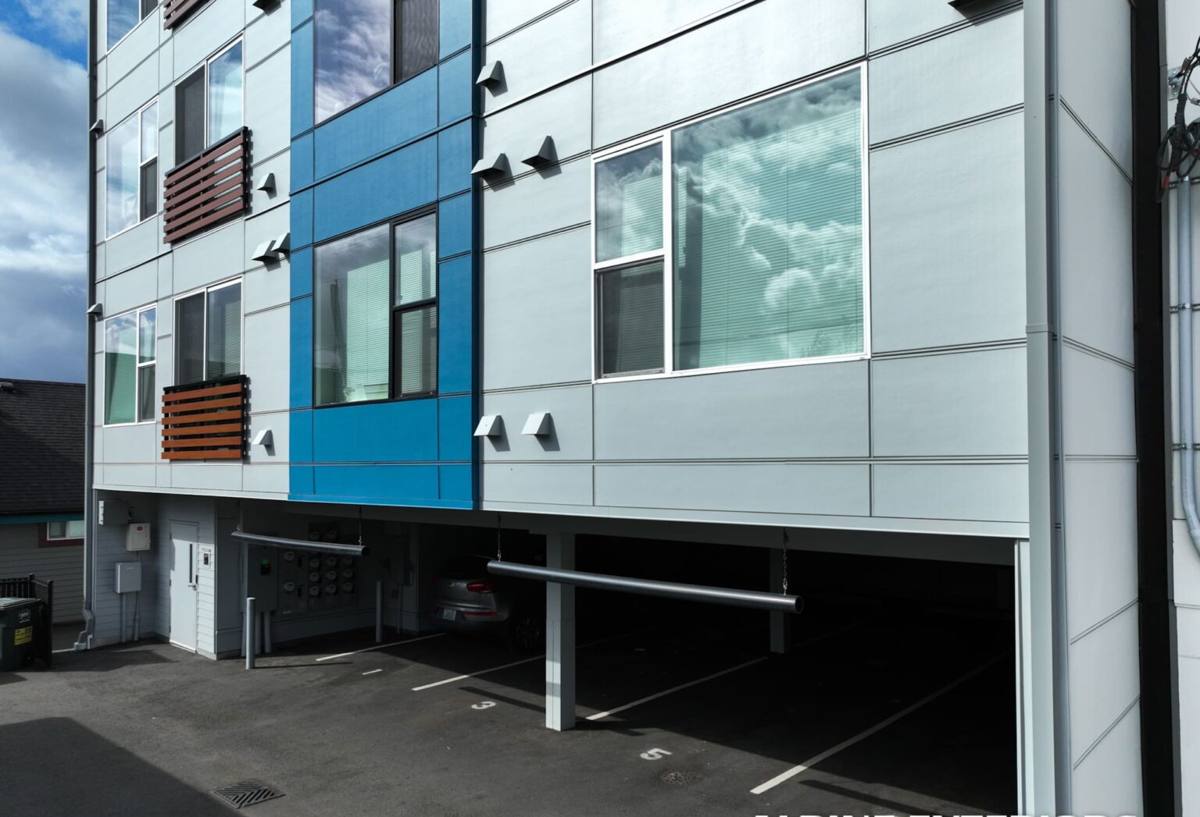
What Blaine's Coastal Climate Does to Windows Over Time
Salt Air
Airborne salt is corrosive to certain metals and can degrade some finishes and hardware faster than in non-coastal areas. Window balances, locks, hinges, and screen frames made from lower-grade materials are usually the first components to show wear. Over time, corroded hardware can keep a window from sealing tightly, which is exactly the kind of small failure that quietly increases a home's heating and cooling load.
Driving Rain
Wind-driven rain doesn't just fall on a window, it pushes against it, testing every seal, flashing detail, and drainage path. A window that's rated well for still-air water resistance can still leak under sustained wind-driven rain if it wasn't installed with the right flashing and sill pan detailing. Water intrusion around a window frame is one of the more common causes of hidden rot in walls near Blaine's coastline.
Moss and Persistent Moisture
Shaded areas and north-facing walls near Birch Point often stay damp for long stretches, especially through fall and winter. Moss and algae can take hold on sills, trim, and even glazing if surfaces aren't shedding water properly. Beyond the cosmetic issue, sustained moisture against wood trim or an improperly sealed frame edge accelerates rot and can compromise the insulating performance of the window assembly itself.
What Actually Makes a Window Energy-Efficient in This Climate
A window's energy performance comes down to a handful of measurable factors, but in a coastal setting like Birch Point, how those factors hold up over time matters as much as their starting numbers.
- U-factor — how well the window resists heat transfer; lower is better for our heating-dominated climate.
- Solar heat gain coefficient (SHGC) — how much solar heat passes through the glass; matters more on west- and south-facing water-view walls.
- Air leakage rating — how much air moves through the assembly when closed; directly tied to draftiness and comfort.
- Seal and gasket durability — how long the weatherstripping and glazing seals hold up under repeated wind and moisture exposure.
- Frame material stability — whether the frame expands, contracts, or degrades in a way that opens gaps over time.
The first three show up on the label. The last two only show up years later, which is why product selection and installation quality matter just as much as the energy rating sticker.
Choosing the Right Frame and Glass for a Salt-Air Environment
There's no single "best" window material for every home, but some materials are a better professional fit for Birch Point's exposure than others. We steer homeowners toward options with a track record of holding up to coastal wind and moisture rather than whichever product happens to be cheapest up front.
| Frame Type | Coastal Performance | Trade-Offs |
|---|---|---|
| Vinyl | Good moisture and salt resistance, low maintenance | Can expand/contract more with temperature swings; quality varies widely by manufacturer |
| Fiberglass | Very stable dimensionally, strong resistance to moisture and corrosion | Higher upfront cost than vinyl |
| Wood / Wood-Clad | Excellent insulating properties, classic appearance | Needs consistent maintenance to keep moisture from reaching exposed wood; higher upkeep near salt air |
| Aluminum | Strong and slim sightlines | Poor insulator unless thermally broken; more prone to corrosion without proper coatings |
For most Birch Point homes, we recommend vinyl or fiberglass frames with a proven coastal warranty, paired with dual- or triple-pane glass using a low-E coating and argon or krypton gas fill. Where wood-clad windows are chosen for appearance, we make sure the cladding and sill detailing are built to keep exposed wood protected from driving rain.
Our Installation Process
Even the best window on the market will underperform if it's installed poorly, and installation quality is where coastal wind and rain expose shortcuts fastest. Our process is built around that reality:
- On-site assessment. We evaluate each opening's exposure, existing water damage, and framing condition before recommending products.
- Proper removal. We check for hidden moisture or rot behind the old window before it becomes a surprise mid-install.
- Flashing and sill pan installation. This is the step that determines whether wind-driven rain stays out for good. We don't skip it to save time.
- Air-sealing and insulation. Gaps around the frame are properly sealed and insulated, not just caulked over on the surface.
- Weatherproofing the exterior. Trim, caulking, and finish work are done to shed water away from the frame, not toward it.
- Final inspection and walkthrough. We check operation, seals, and drainage before we consider the job done.
Skipping or rushing any one of these steps is how a good window ends up performing like a mediocre one within a few years.
Signs Your Birch Point Home's Windows Are Costing You Money
Homes near the water often show window wear earlier than homes further inland. Watch for these signs:
- Noticeable draft or cold spots near window frames in winter
- Condensation forming between panes (a sign the seal has failed)
- Visible moss, algae, or persistent black staining on sills or trim
- Difficulty opening, closing, or locking windows
- Soft or discolored trim/framing around the window opening
- A noticeable jump in heating costs without another clear cause
- Peeling paint or swollen wood on window-adjacent siding
Any one of these on its own isn't necessarily urgent, but a few together usually mean the window assembly is no longer doing its job efficiently.
Cost Factors for Window Replacement Near Birch Point
Every home and opening is different, but the main variables that move the price on a coastal window job are consistent enough to plan around.
| Factor | Why It Matters Here |
|---|---|
| Frame material | Fiberglass and higher-tier vinyl cost more than basic vinyl but resist coastal wear longer |
| Number and size of openings | Larger or more numerous windows increase both material and labor cost |
| Existing damage | Hidden rot or water damage found during removal adds repair scope |
| Wall exposure | West- and water-facing openings often need more robust flashing and sealing detail |
| Glass package | Triple-pane or upgraded low-E coatings add cost but improve comfort and efficiency |
| Trim and finish work | Matching existing exterior trim or repairing weather-damaged trim adds labor |
We walk every homeowner through these factors before quoting so there are no surprises once the job starts.
Why Local Experience in Birch Point Matters
A contractor who mostly works inland can install a window correctly by general standards and still miss the details that matter on a wind- and salt-exposed wall. Knowing which orientations in this neighborhood take the worst of the driving rain, which frame materials hold up and which don't, and how much extra attention flashing and drainage need here isn't something you get from a spec sheet — it comes from doing the work in this exact environment repeatedly. That experience shows up in fewer callbacks, windows that still seal tight years later, and installation decisions that account for conditions a generic quote wouldn't catch.
Keeping Coastal Windows Performing Long-Term
Energy-efficient windows stay efficient longer with a little routine attention, especially in a moss-prone, salt-air setting:
- Rinse salt residue off exterior frames and glass periodically, especially after storms
- Keep weep holes and drainage tracks clear of debris and moss buildup
- Check and clean weatherstripping seals once or twice a year
- Repaint or reseal exposed wood trim promptly if finish begins to fail
- Address small caulking gaps before they become water intrusion points
None of this is complicated, but skipping it in this climate shortens a window's useful life faster than in drier parts of the county.
If your Birch Point home has drafty, foggy, or hard-to-operate windows, we're glad to take a look and give you a straightforward, no-pressure estimate on what energy-efficient replacement would actually involve for your home. Use the form below to get started.