 Blaine Window
 Birch Bay Sits Right at the Edge of Where Siding Fails Fastest
Birch Bay's homes take a different kind of beating than houses even a few miles inland. The bay sends salt-laden air across roofs and walls almost daily, prevailing wind drives rain sideways into wall assemblies instead of letting it run straight down, and the tree cover and marine humidity that make the area beautiful also keep north- and west-facing walls damp long after a storm has passed. That combination — salt, wind-driven moisture, and shade-fed moss growth — is exactly the mix that exposes weak siding installation faster than almost anywhere else in Whatcom County.
None of this means Birch Bay is a bad place to own a home. It means the siding on that home, and the way it's installed, has less room for error. A product that's marginal in a dry inland climate can fail outright here in a decade or less. An installation with a shortcut in the flashing or fastening can show rot behind the wall before the paint even starts looking tired.
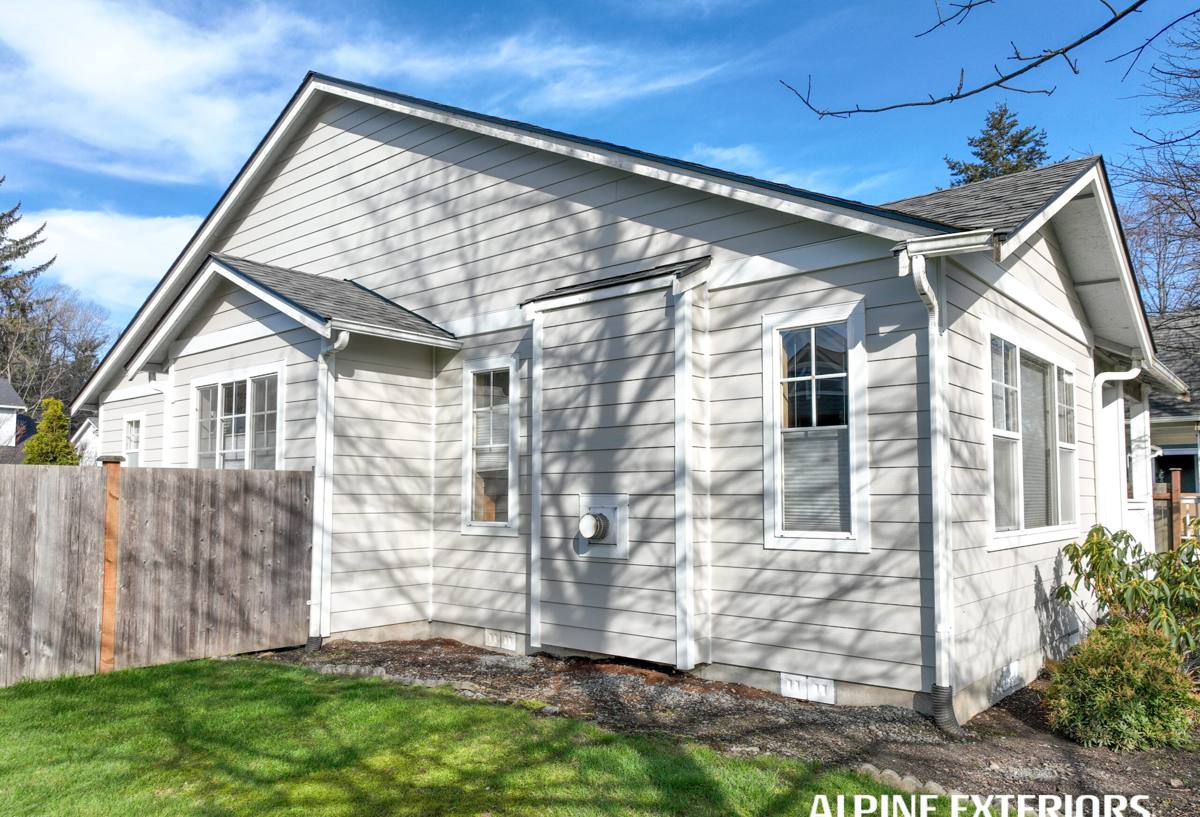
What Salt Air and Wind-Driven Rain Actually Do to Siding
Salt Air
Airborne salt is corrosive to exposed metal fasteners, trim flashing, and hardware, and it accelerates the breakdown of coatings that aren't formulated to resist it. Over years, salt exposure also leaves a fine residue that holds moisture against the wall surface longer than plain rain would on its own — which matters more than people expect, because it's sustained dampness, not a single wet day, that actually rots wood-based products or lets water find its way behind poorly lapped panels.
Wind-Driven Rain
Birch Bay's exposure means rain rarely just falls — it gets pushed sideways into laps, seams, and penetrations that would stay dry in a calmer setting. This is why lap spacing, caulking discipline, and correct flashing at windows, doors, and trim boards matter more here than the siding material itself. A great product installed with a gap in the weather barrier will leak. A modest product installed with obsessive attention to water management will often outlast it.
The Long Moss Season
Shaded, north-facing walls near the water can stay damp for months at a stretch, which is ideal growing conditions for moss and algae on any surface that holds moisture at its face. Siding that absorbs water — or that traps moisture behind it due to poor ventilation gaps — becomes a long-term host for growth that stains, degrades finishes, and, on wood-based products, contributes to slow rot.
What a Correct Installation Actually Involves Here
A siding job that's built for Birch Bay's exposure isn't about buying a premium product and nailing it up. It's a system, and every layer matters:
- Weather-resistant barrier: A continuous, correctly lapped and taped house wrap or building paper behind the siding, with no gaps at seams or penetrations.
- Rainscreen or drainage gap: A small air gap behind the siding lets any water that does get past the surface drain and dry out instead of sitting against the sheathing — important in a climate where walls rarely get a long dry stretch to recover.
- Flashing at every penetration: Windows, doors, hose bibs, light fixtures, and vents all need proper head flashing and kick-out flashing where rooflines meet walls, since these are the spots wind-driven rain finds first.
- Correct fastener placement and spacing: Fastening in the wrong zone of a fiber cement plank, or over-driving nails, creates stress points that crack or loosen over time — especially with the freeze-thaw and wet-dry cycling this area sees.
- Proper clearances: Siding kept off grade, roof lines, and decks by the manufacturer's specified minimums so splash-back and standing water don't sit against the bottom edge.
- Factory-finished panels where possible: Factory-applied finishes cure under controlled conditions and hold up to salt and UV exposure far better than field-applied paint, which is one of the reasons finish choice matters as much as the substrate.
Why We Only Install James Hardie Fiber Cement
We standardized on James Hardie for every siding job we take on, Birch Bay included, because it's engineered for exactly this kind of exposure. It's non-combustible fiber cement, it doesn't absorb and swell with moisture the way wood-based products can, and Hardie's HZ5 product line is specifically engineered for cold, wet, coastal-adjacent climates like Whatcom County's. The ColorPlus factory finish holds color and resists the fading, chalking, and moisture staining that field-applied paint struggles with in a salt-air environment, and it comes with a strong, transferable warranty backed by a manufacturer with decades of track record in the Pacific Northwest.
We're not going to tell you every other siding product is unusable — plenty of homes around the region have other materials on them and get by. But when we're the ones doing the install and putting our name behind the result, we want a product with a proven moisture and longevity profile in this specific climate, not one that asks a homeowner to stay ahead of maintenance to avoid problems. Fiber cement done right is largely a set-it-and-forget-it exterior in a climate that punishes anything less.
Our Process for Birch Bay Jobs
1. On-Site Assessment
We look at wall orientation relative to prevailing wind and water, existing moisture damage, current flashing condition, and any trim or window details that will affect the install — this is different for a bay-facing wall than a sheltered one, even on the same house.
2. Tear-Off and Sheathing Check
Old siding comes off and we inspect the sheathing underneath. This is often where hidden moisture damage from a prior installation shows up, and it needs to be dealt with before anything new goes on the wall — no exceptions.
3. Weather Barrier and Drainage Plane
New house wrap, correctly lapped, plus a rainscreen gap where the wall assembly calls for it, sets up the wall to shed and dry moisture instead of trapping it.
4. Flashing and Trim Detail
Every window, door, and penetration gets flashed before siding closes it in — this step is invisible once the job is done, which is exactly why it's the step that separates a durable install from a callback.
5. Hardie Installation to Spec
Panels are fastened per manufacturer spacing and clearance requirements, with attention to caulking joints and trim intersections that see the most wind-driven rain.
6. Final Walkthrough
We walk the finished job with the homeowner, covering what was done and what basic upkeep looks like going forward.
Cost Factors on a Birch Bay Siding Job
| Factor | Why It Matters Here |
|---|---|
| Wall exposure (bay-facing vs. sheltered) | Bay-facing walls often need more flashing detail and drainage attention, adding labor time |
| Existing moisture damage | Rotted sheathing found at tear-off adds repair scope before new siding can go on |
| Trim and window count | More penetrations mean more flashing points, which is where most labor hours go |
| Home size and wall complexity | Multiple stories, dormers, and cut-up wall lines add material waste and install time |
| Access | Waterfront lots, steep grades, or tight setbacks can affect staging and scaffolding needs |
| Hardie product line and finish | HZ5 panels and specific ColorPlus finishes vary in material cost |
Signs a Birch Bay Home Needs New Siding Now
- Soft spots or visible give when you press on the siding near the bottom edge or under windows
- Persistent moss or algae staining that comes back within weeks of cleaning
- Paint or finish that's peeling, chalking heavily, or fading unevenly on bay-facing walls
- Visible gaps, warping, or buckling at panel seams
- Musty smell or discoloration on interior walls that share an exterior with a damp-looking wall outside
- Rust staining running down from fasteners or trim
Any one of these on its own might be cosmetic. Two or more, especially on a wall that faces the bay or stays shaded most of the day, usually means moisture has already gotten past the surface.
Why a Crew That Already Works Birch Bay Matters
Siding installation isn't one-size-fits-all across Whatcom County. A crew that's used to inland Blaine jobs may not automatically think through kick-out flashing on a bay-facing gable, or account for how long a shaded wall near the water actually stays wet after a storm. A crew that already works Birch Bay regularly has seen where past installations failed on homes like yours, knows which details get skipped on cheaper jobs, and builds those lessons into every wall they close up. That local pattern recognition is worth more than it sounds like on paper — it's the difference between an install that holds up through one Whatcom County winter and one that holds up through fifteen.
What to Expect After Installation
A correctly installed Hardie system in this climate needs very little upkeep — periodic rinsing to clear salt residue and any moss growth, an eye kept on caulked joints over the years, and prompt attention if a joint ever opens up. That's a real contrast to wood-based or absorptive products that need repainting or resealing on a recurring cycle just to keep the same protection level.
If your Birch Bay home is showing any of the warning signs above, or you're simply due for a siding replacement and want it done right the first time, we're happy to take a look and walk you through what your specific walls need. Reach out for a free, no-pressure estimate — the form below gets you started.