 Blaine Window
 Windows Built for Bellingham's Coastal Climate
Bellingham sits close enough to the water that homes take a steady beating from salt-laden air, wind-driven rain, and the low, damp gray stretches that define a Whatcom County winter. Add in the tree cover common to many Bellingham neighborhoods and you get a fourth factor most window guides never mention: moss and organic growth that thrives in constant shade and moisture. Windows here don't fail because they're old — they fail because they were never matched to this specific mix of conditions in the first place.
A window that performs fine in a dry inland climate can struggle in Bellingham within a decade. Seals soften faster in persistent damp. Aluminum and untreated wood components corrode or rot where moisture sits against them day after day. Frames that aren't detailed correctly at installation let wind-driven rain track sideways under trim instead of shedding down and away. None of this is exotic — it's just what happens when a product or an installer doesn't account for local weather patterns.
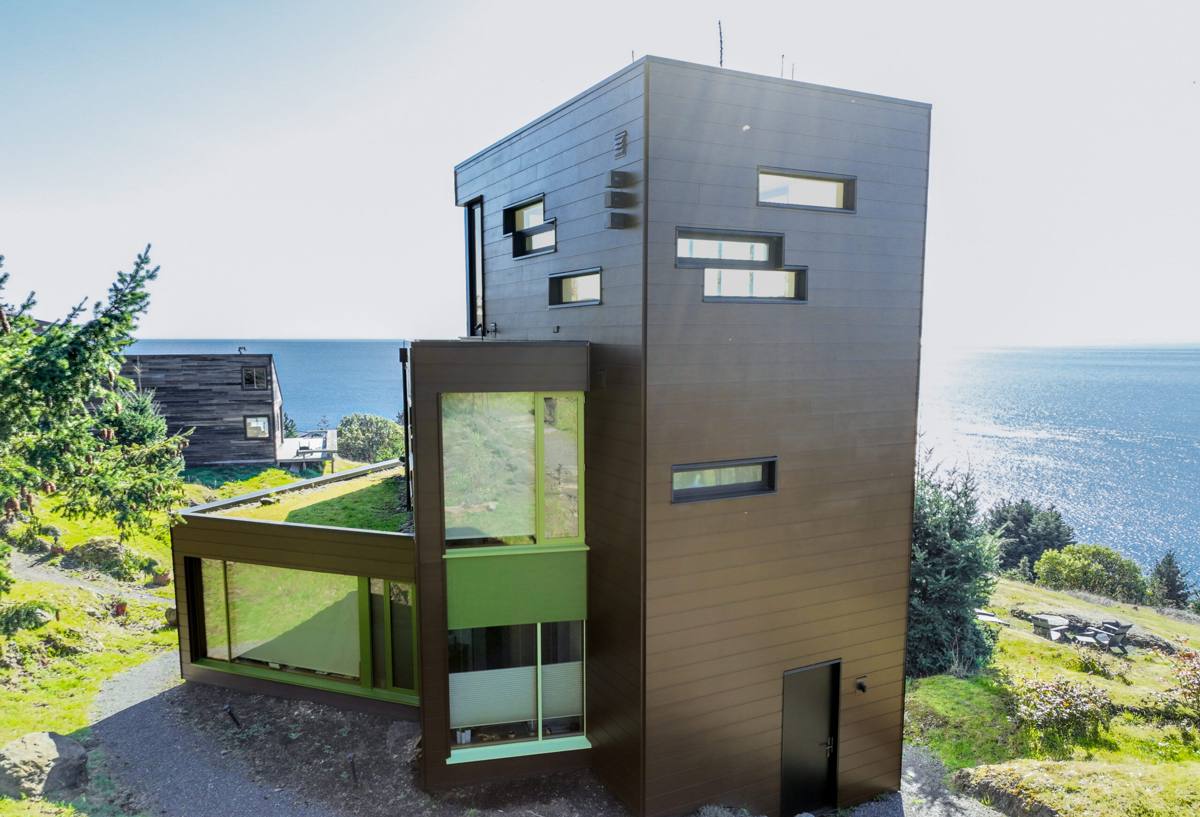
What Bellingham Homes Actually Need From Their Windows
Moisture Management First
Before style or energy ratings, the first question for any Bellingham window project is: where does the water go? Driving rain off the Strait doesn't fall straight down — it hits siding and window assemblies at an angle, which means flashing, sill pans, and weep paths matter as much as the window unit itself. A well-built window with poor flashing detail will still leak. A modest window installed with correct drainage will hold up for years.
Salt Air and Hardware Corrosion
Homes closer to the water deal with salt air working into hinges, locks, and cranks over time. Hardware finish and base material matter more here than in inland parts of the county — cheap plated hardware can start showing corrosion within a few seasons, while properly finished stainless or coated hardware holds up far longer.
Moss, Shade, and Trim Rot
Wooded lots and shaded north-facing walls, common around Bellingham, stay damp longer after every rain. Moss and algae take hold on window sills, exterior trim, and cladding that doesn't dry out between storms. Wood trim in these spots needs either regular maintenance or a low-maintenance cladding approach — otherwise rot sets in behind paint that looks fine on the surface.
Frame Materials: What Holds Up Locally
There's no single "best" window material for every home — it depends on exposure, budget, and how much upkeep an owner wants to take on. Here's how the common options actually perform under Whatcom County conditions:
| Frame Material | Moisture Performance | Maintenance | Best Fit |
|---|---|---|---|
| Vinyl | Excellent — won't rot or corrode | Low | Most homes, budget-conscious replacements |
| Fiberglass | Excellent, very stable in temperature swings | Low | Higher-exposure walls, larger openings |
| Wood (clad exterior) | Good if cladding is intact; interior wood adds warmth | Moderate | Character homes wanting a wood interior look |
| All-wood, exposed exterior | Poor to fair in constant damp/shade without upkeep | High | Homes with an owner committed to regular repainting/sealing |
| Aluminum | Fair — prone to corrosion and condensation near salt air | Moderate | Limited local use; we typically steer clients toward clad or fiberglass instead |
We're honest with clients about exposed wood and bare aluminum on shaded or water-facing walls: they can look great, but they demand upkeep that many homeowners underestimate when they're comparing options in a showroom. That's a maintenance-burden conversation, not a knock on either material — both have their place on the right wall with the right owner behind them.
Glass and Energy Performance for This Climate
Whatcom County doesn't see extreme heat, but it does see long stretches of cold, wet, low-light weather where a home's heating system runs steadily for months. That makes a few glass choices more relevant here than in sunnier climates:
- Double-pane, low-E glass is the baseline for new installations — it cuts heat loss and reduces the cold-glass draft feeling common near older single-pane windows.
- Argon or krypton gas fill adds meaningful insulation value with no visible difference, worth including on most replacement jobs.
- Warm-edge spacers reduce condensation at the glass edge, which matters in a climate where indoor humidity plus cold glass equals fogging and eventual seal stress.
- Tempered glass where code requires it — near doors, low sills, and wet areas — is non-negotiable and something we verify on every job, not just where it's obviously needed.
Condensation between panes is one of the clearest signs a seal has failed, and it shows up faster in persistently damp climates like this one. If you're seeing fog or moisture trapped inside the glass on an existing window, that unit's insulating value is already gone even if the frame looks fine.
What a Correct Installation Involves
The window unit itself is maybe half the job. The rest is installation detail, and in a climate like Bellingham's, that detail is what separates a window that lasts twenty-plus years from one that leaks within five.
Removal and Opening Inspection
Once the old window is out, the rough opening gets inspected for hidden rot or moisture damage — something that's common on older homes where a prior window leaked slowly for years without an obvious sign indoors. Any damaged framing gets addressed before the new unit goes in; installing over compromised framing just hides a bigger problem.
Flashing and Drainage
Proper flashing directs water down and out and around the window opening rather than into the wall cavity. This is the single most common point of failure we see corrected on older Bellingham homes — flashing that was skipped, reversed, or taped over instead of properly lapped.
Sealing and Insulation
Gaps around the frame get insulated, and sealant is applied at the specific points that need it — not everywhere, since over-sealing can trap moisture in the wrong place and cause its own problems.
Interior and Exterior Finish
Trim, casing, and sill work get finished cleanly on both sides, matched to the home's existing style where that matters to the owner.
Our Process for Bellingham Projects
- On-site assessment — we look at exposure (sun, shade, wind direction, tree cover), existing window condition, and any signs of past moisture issues.
- Product recommendation — matched to that specific wall's exposure, not a one-size answer for the whole house.
- Written estimate — clear on materials, scope, and timeline, no pressure to decide on the spot.
- Installation — including proper flashing and drainage detail, with the opening inspected before the new window goes in.
- Final walkthrough — checking operation, seals, and finish work before we call the job done.
Signs It's Time to Replace, Not Repair
- Fog or moisture trapped between panes of glass
- Frames that feel soft, spongy, or show visible rot at corners or the sill
- Windows that won't stay open, lock properly, or seal tight when closed
- Persistent moss or dark staining on the sill or surrounding trim that keeps returning after cleaning
- Noticeable draft or cold spot near the window in winter
- Paint that keeps failing on wood trim despite regular repainting
If only one or two of these apply, a repair or resealing may be enough. If several show up on the same window, replacement is usually the better long-term value — repeated repairs on a failing frame rarely outlast a proper replacement.
Why Local Installation Experience Matters
Window installation isn't identical everywhere. A crew that mostly works drier inland climates can put in a technically fine window and still get the flashing detail wrong for wind-driven coastal rain, because that's not the failure mode they see every day. Working regularly in and around Bellingham and greater Whatcom County means seeing how homes here actually age — which walls take the worst weather, which trim styles hold up in the shade, which hardware finishes last near the water — and building that knowledge into every estimate and every install, not learning it from a callback years later.
It also means being straightforward about trade-offs specific to this area: where a lower-maintenance material is the smarter long-term choice even if a homeowner initially wants the look of exposed wood, or where an extra flashing step adds a bit of labor cost but prevents a much larger repair down the road.
Get a Free Estimate
If you're weighing window replacement for a Bellingham home, we're glad to take a look and give you a straight assessment of what your home's exposure actually calls for — no pressure, no inflated scope. Use the form below to request a free, no-obligation estimate.